Yemen's war is closing on the government's last big city. On Monday, November 16, 2026, people in the Yemeni military told Reuters the Houthis had advanced to Khor Omairh on the southern coast, about 100 kilometres (62 miles) west of Aden, and were 25 kilometres from government lines at Qawah. Aden is the port city that has served as the seat of Yemen's internationally recognised government since the Houthis took the capital, Sanaa, in 2014.
The advance followed a government pullback. On Sunday, November 15, the Yemeni government said it was withdrawing from areas near the Bab el-Mandeb Strait — the global shipping artery at the mouth of the Red Sea — to focus on defending Aden. The Southern Armed Forces, in their own statement the same day, called it a repositioning of forces from Dhubab Airport and the Bab al-Mandab area. A second wire put the Houthis even closer a day earlier: four military and two government sources told AFP the group had seized the Al-Maqatirah and Al-Madaribah districts in Lahij province and held the Al-Kharaz camp about 60 kilometres from Aden, and Xinhua's sources confirmed the seizure of the Kharaz military base, which guarded the western approaches to the city. The two distances are different positions on different days of the same push east along the coast, and both are reported here with their sources.
Saudi Arabia answered the setback by changing the command. A royal decree from King Salman on Monday replaced the commander overseeing the Saudi-led coalition: Lieutenant General Fahd bin Hamad Al-Salman was moved to adviser to the defence minister for military affairs, and Chief of the General Staff General Fayyad Al-Ruwaili was given the additional role of commanding the joint forces, Saudi state media reported. Two Western diplomats told Reuters the change was linked directly to the battlefield developments and the Houthi advance.
Inside Aden, the war is getting louder without having arrived. Residents told Reuters government security forces had set up more checkpoints and were running identity checks, and AFP reported sandbag fortifications and tunnels being dug around the city. "Food supplies are available, and so is fuel. However, people are worried about the retreat of government forces and the possibility of fighting drawing closer to Aden," government employee Amin Mahmoud told Reuters by phone. Three people in the government said the focus now is securing Aden and Lahj province, and that forces are redeploying to prepare to recapture seized areas. Analyst Mohammed Al-Qadhi was blunter: "There is a serious threat to Aden because they are getting closer and closer. It is a major setback. The government was aiming to recapture Sanaa, but now they are defending Aden."
The wider picture explains the speed. Yemen's civil war had been dormant since 2022 until it reignited this summer as a spillover of the US-Iran conflict. Government forces retook key positions around the strait, including Dhubab, in a counter-attack in October, but could not drive the Houthis from the area or retake the coastal city of al-Mocha — and the Houthis are also besieging Taiz, the country's third-biggest city, in the mountains above the approach to Aden. The UN refugee agency says it is deeply concerned about fighting near the Kharaz refugee camp, where 9,600 refugees are at risk.
Why it matters: Aden is not just a city on a map — it is the government's seat, its main southern port, and the ground that guards the Bab el-Mandeb shipping lane. A coalition that set out to retake Sanaa is now digging in to keep Aden, and Riyadh has changed the man in charge mid-retreat. What happens at Qawah and on the Lahij line decides whether this stays a setback or becomes the fall of the government's base.
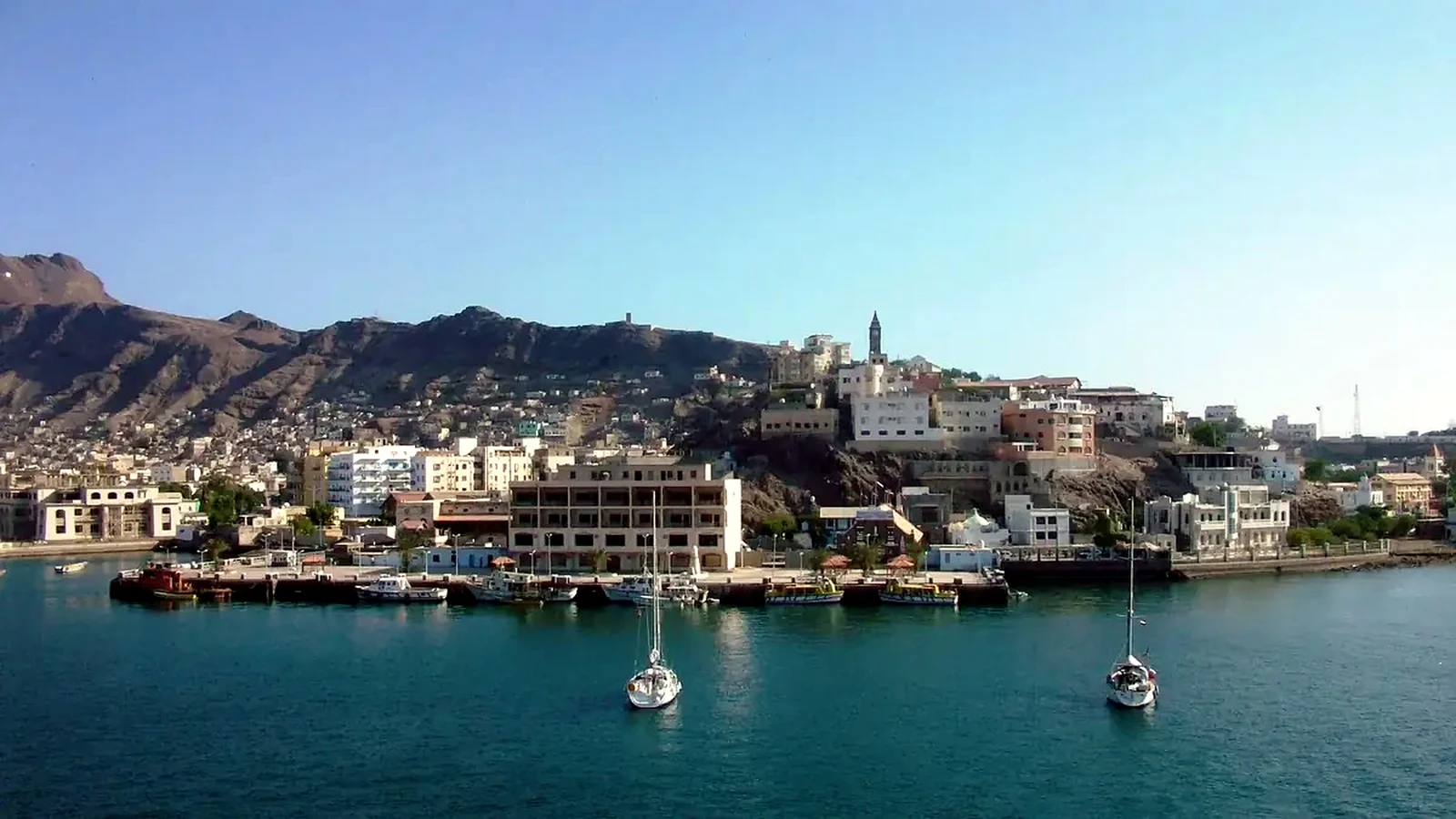
Photo: the harbour of Aden, Yemen (file photo, 2010).
Sources: Reuters (November 16, 2026); AFP via Geopolitiki (November 16–17, 2026); Xinhua via People's Daily (November 15, 2026); Southern Armed Forces statement (November 15, 2026) via FDD's Long War Journal.