Estonia will close all of its border crossings with Russia from December 1, the government in Tallinn announced on Sunday, November 15, 2026, after an attempted sabotage attack on an Estonian drone maker that the country's security service attributes to Russia's military intelligence agency, the GRU.
The attack came first. In the early hours of Saturday, November 14, attackers smashed windows at the Viimsi premises of Threod Systems, north of the capital, Tallinn, and poured flammable liquid inside, in what Estonia's Internal Security Service, known as Kapo, said was an attempt "with the aim of causing an explosion and setting the building on fire." The company's own security team thwarted the attempt. No one was injured, extensive damage was averted, and Threod's production and deliveries were not significantly affected, officials said. Threod Systems manufactures long-range reconnaissance and attack drones and supplies Ukraine, among other countries.
Estonian authorities detained eight people in connection with the attempt. All eight live in Latvia, and prosecutors have asked a court to remand five of them in custody while the investigation continues. Kapo director general Margo Palloson said counterintelligence had confirmed the operation was coordinated by the GRU. "This was yet another attempt by Russia to carry out an act of sabotage in Estonia," he said. That attribution is the Estonian authorities' claim: Estonia has not published the underlying evidence, and it has not been tested in court.
Foreign Minister Margus Tsahkna announced the response on Sunday in a post on X, citing what he described as clear evidence that the GRU ordered the attack. "Russia must understand that hostile actions against Estonia come with consequences," he wrote. "Attempts to intimidate, destabilise, or undermine our security will not go unanswered." Prime Minister Kristen Michal said he had discussed closing the border with Interior Minister Igor Taro and asked officials to prepare the necessary steps; Taro said he will propose to the government that all Estonia-Russia road border crossing points be closed to both pedestrians and vehicles from the beginning of December, with the government to discuss the proposal — including whether it will be temporary or indefinite — in the coming days. No end date for the closure has been given, and Estonians currently in Russia have about two weeks to return before it takes effect.
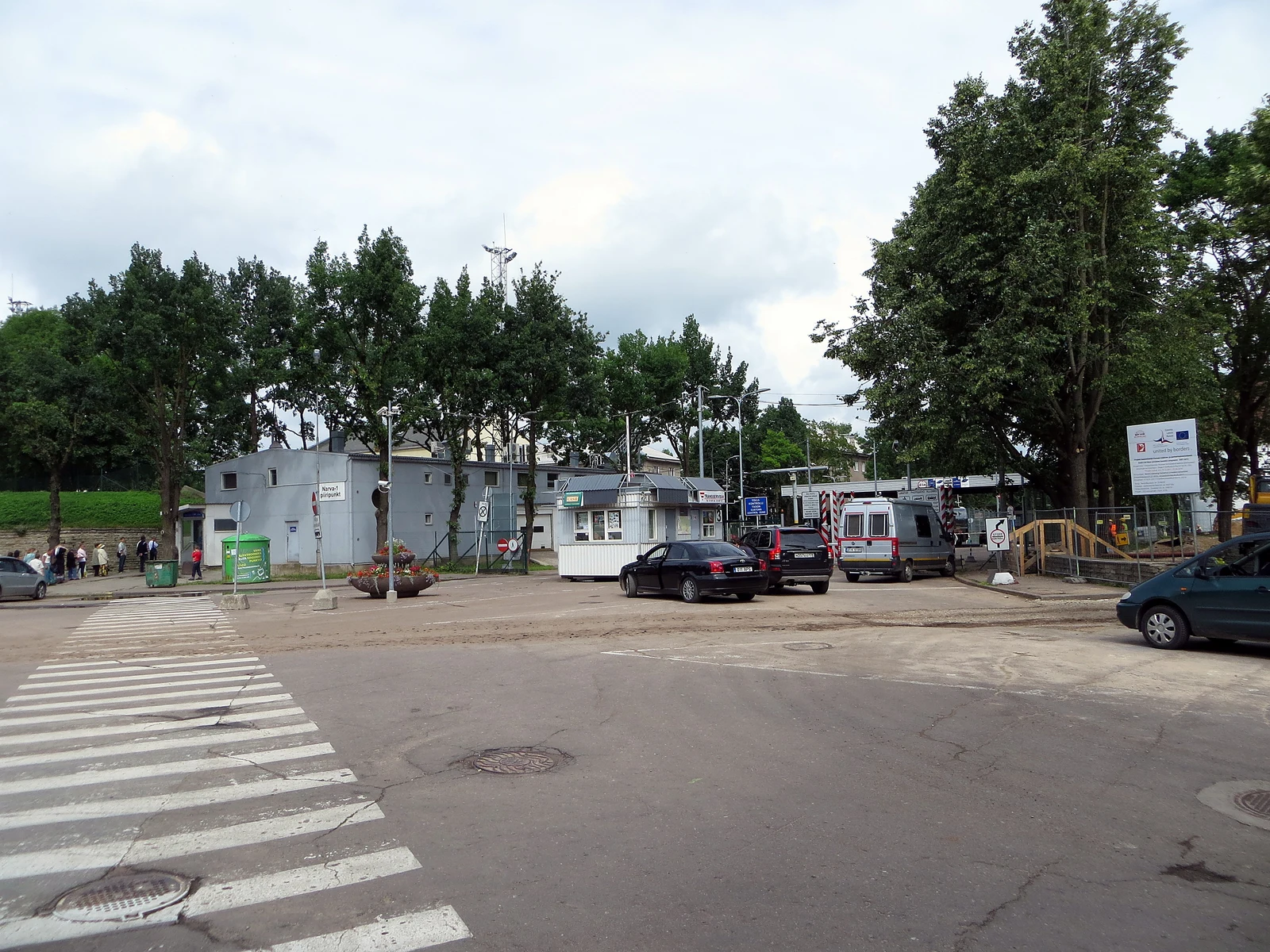
Estonia, a NATO and European Union member and a strong supporter of Ukraine, has three open road crossings with Russia: Narva in the north, and Koidula and Luhamaa in the southeast. They currently admit pedestrians and freight and operate from 7 a.m. to 7 p.m. Michal said the closure was needed to reduce the risk of further attacks, saying Russian intelligence services exploit border crossings to exert influence over people, and to "send a clear message that attacks on Estonia's defence industry and defence capabilities" are unacceptable. He linked the attacks to Estonia's support for Ukraine: "Russia's aim is to make us afraid, make us hesitate and weaken our support for Ukraine. Estonia's response is the opposite." Tsahkna said he had informed his counterparts in Finland, Latvia and Lithuania, and that closing the crossings would also strengthen efforts to prevent sanctions evasion.
It is the second attack on an Estonian defence company that authorities have attributed to Russia in three months. In August, an arson attack hit Milrem Robotics in Tallinn, which makes unmanned ground vehicles used in Ukraine; in September, Kapo said it was confident that incident was "a deliberate and pre-planned attack carried out on behalf of Russian special services," part of a pattern of Russian attacks targeting defence and drone companies with links to Ukraine.
Russia has rejected Estonia's accusations. Moscow regularly denies involvement in sabotage operations in Europe, and on the Milrem attack the Kremlin denied any link to Russia, calling the accusation "baseless" and "ill-considered" and saying it had "absolutely no relation to reality." Responding to the closure announcement, Russian Foreign Ministry spokeswoman Maria Zakharova told the state news agency Tass: "If these are their real plans, then they fit into yet another bout of aggressive and unrestrained Russophobia."
Why it matters: the closure would shut one of the last open land routes between Russia and the European Union, at the Narva crossing used heavily by families split across the border, and it marks Tallinn's sharpest state-level response yet to what it describes as a Russian hybrid campaign against the defence firms arming Ukraine. What happens next turns on two separate tracks: the formal government decision that sets the closure's scope and duration, and a prosecution in which the GRU attribution — so far an intelligence assessment announced by the Estonian state — would have to be evidenced in court.
Sources: ERR News (Estonian public broadcaster), Nov. 15, 2026; Reuters, Nov. 15, 2026; The Irish Times, Nov. 15, 2026. The GRU attribution is reported as the Estonian authorities' claim throughout; Russia's denial and response are reported in the same sources.
The hero image is a file photo of the Narva-1 border station in Narva, Estonia (Bernt Rostad via Wikimedia Commons, CC BY 2.0).