The next move in the push to end Russia's war in Ukraine runs through Berlin. U.S. President Donald Trump's envoys Steve Witkoff and Jared Kushner plan to meet Ukrainian and European officials in the German capital on Thursday, November 19, 2026, to work on security guarantees for Ukraine and a plan to rebuild its economy after the war, Axios reported, citing a U.S. official.
The official said the talks aim to develop guarantees strong enough to deter future Russian attacks, alongside a comprehensive plan for Ukraine's postwar economic reconstruction, and to prepare the next round of multilateral negotiations. The Berlin meeting sits inside the Coalition of the Willing, the grouping of more than 30 countries backing Ukraine that the United Kingdom and France founded in early 2025. German Chancellor Friedrich Merz is hosting the coalition's summit in Berlin the same day, and the German government says more than 20 leaders are expected.
Europe arrives in Berlin with a single team for the first time. In his nightly address on Monday, November 16, Ukrainian President Volodymyr Zelenskyy said Ukraine had held online talks with Witkoff, Kushner and, for the first time in full, the European side: France, Germany, the United Kingdom, Italy and Poland, together with the European Commission, the European Council and NATO. Zelenskyy said the participants agreed to meet in Berlin under the Coalition of the Willing and to work out concrete joint steps. The five countries and the EU institutions will represent Europe in future talks with Russia, an arrangement the EU announced days earlier.
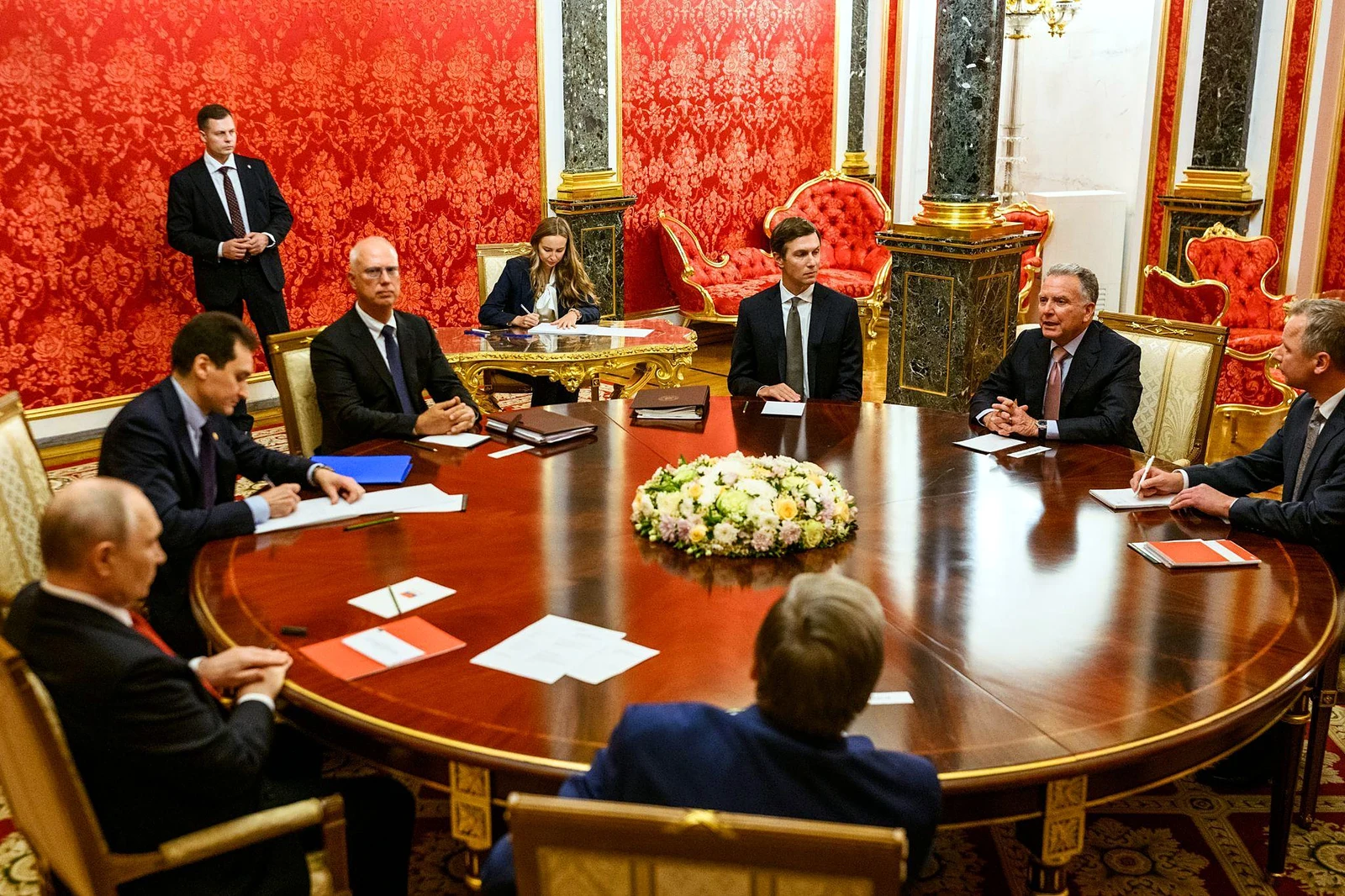
The Berlin meeting lands at the end of a fast-moving ten days. U.S.-mediated delegations from Russia and Ukraine met in Abu Dhabi on November 10 and 11, their first direct talks in nine months, ending with an agreement on a large prisoner exchange but no breakthrough on ending the war. Witkoff and Kushner then briefed Russian President Vladimir Putin at the Kremlin on November 12, where Witkoff said on the record that he hoped the next trilateral meeting would include the Europeans, before flying on to brief Zelenskyy near Dublin. Thursday is also the day Trump is scheduled to meet Putin and Chinese President Xi Jinping in China, and the U.S. official described the Berlin talks and the China trip as a coordinated diplomatic effort.
The other side has not signed on. Senior Kremlin aide Yuri Ushakov has said Russia has not yet agreed to European representatives taking part in the next round of talks, saying what is being discussed is a trilateral format, and Kremlin spokesman Dmitry Peskov has argued Europe must first name a representative. That makes Berlin, for now, a meeting of Ukraine and its supporters to align their position, not a negotiation with Moscow, and German officials had not initially confirmed the U.S. negotiators' participation when asked by AFP.
Why it matters: security guarantees are the hinge of every version of a settlement. Kyiv has insisted that any deal without firm guarantees and economic backing invites a third invasion, while Moscow has treated European involvement itself as a concession to be granted. What Witkoff and Kushner can get Ukraine and Europe to agree on in Berlin on November 19 will set the terms the envoys carry into whatever round comes next.