The United States has lost its measles elimination status after 26 years, the Pan American Health Organization announced on Tuesday, November 17, 2026, after determining the country failed to stop continuous transmission of the highly contagious virus for more than a year. Bolivia and Mexico have also lost their measles elimination status, PAHO said.
The decision came from PAHO's independent Measles and Rubella Elimination Regional Monitoring and Re-Verification Commission, which met last week to review the epidemiological evidence from across the Americas. The commission applies a fixed test: if a country shows sustained transmission for more than 12 months from a single genotype and lineage, measles transmission is considered re-established. "The Commission concluded that endemic measles transmission has now been re-established in Bolivia, Mexico and the United States and recommended that their measles elimination status be withdrawn, a recommendation which I have accepted," PAHO Director Jarbas Barbosa told a media briefing on Tuesday.
Elimination never meant zero cases. It meant the virus was no longer spreading on its own inside the country, and that new cases arrived with travellers and were stamped out within a year. The United States reached that milestone in 2000, a historic public health achievement the CDC credits to its highly effective vaccination program. Holding it for 26 years made Tuesday's ruling the formal end of one of the country's longest-running public health streaks.
The numbers behind the ruling are the worst in a generation. Reuters reports that some 7,700 people in the United States have been infected with measles and 13 have died since 2025, with the overwhelming majority of cases among people who were not vaccinated. The U.S. Centers for Disease Control and Prevention, in its own data updated November 13, confirmed 5,412 measles cases in 2026 alone as of November 12, reported across 47 jurisdictions, with 43 new outbreaks this year and 96 per cent of confirmed cases tied to outbreaks. That is more than double the 2,289 cases recorded in all of 2025, and it makes 2026 the country's biggest measles year in more than three decades. The death counts differ by source, and the difference matters: the CDC's official tally lists six deaths in 2026 and notes the figure is preliminary and subject to change, while state health departments have reported 10 deaths this year in total, which together with three deaths in 2025 accounts for Reuters' figure of 13 since 2025. Pennsylvania has been the hardest-hit state, with seven measles-related deaths, according to Reuters.
The wider region is moving the same way. As of November 13, the Americas had reported 58,213 confirmed measles cases and 82 deaths, compared with 12,596 cases in the same period last year, Barbosa said. Canada lost its elimination status in November 2025 after endemic transmission was re-established there, ending the region's standing as measles-free, and PAHO says other countries in the region are now fighting prolonged outbreaks of their own.
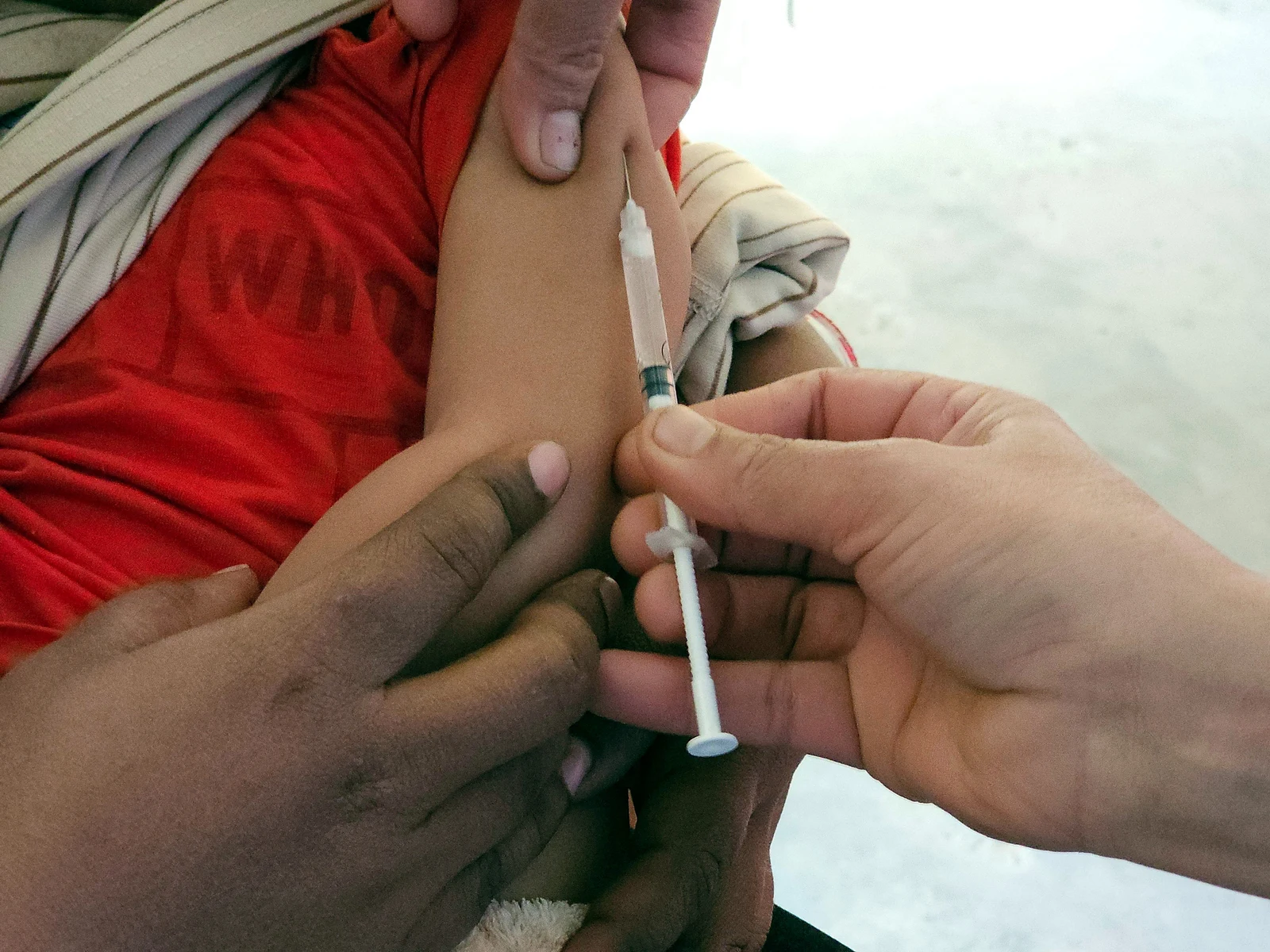
Public health officials trace the resurgence to widening immunity gaps. CDC data shows measles, mumps and rubella (MMR) vaccination coverage among U.S. kindergartners fell from 95.2 per cent in the 2019-2020 school year to 92.4 per cent in 2025-2026, leaving approximately 280,000 kindergartners at risk. Two doses of the MMR vaccine are 97 per cent effective, and the World Health Organization recommends 95 per cent two-dose coverage to maintain the community immunity that protects babies too young to be vaccinated and people who cannot receive the vaccine. Reuters reported that the sharp increase in cases has coincided with declining immunization rates and rising vaccine hesitancy under U.S. Health Secretary Robert F. Kennedy Jr., who has for years spread doubts, without scientific evidence, about the safety of measles vaccines.
The CDC pushed back on the idea that the designation itself is what keeps Americans safe. "The measles elimination designation is not what protects Americans, vaccination does," CDC Director Erica Schwartz said in a statement, adding that the agency is committed to stopping measles outbreaks and plans to work to regain the elimination status, including by equipping states with the tools they need. STAT News reported Schwartz also pointed to $100 million the CDC has invested in state and local health departments to reach affected communities. Barbosa, for his part, framed the ruling as a setback rather than a verdict. "While this is a significant setback, countries are already taking action to bring their outbreaks under control," he said. "Bolivia, Mexico, and the United States are implementing measures to strengthen vaccination, surveillance, and outbreak response." Bolivia's Health Minister Marcela Flores said cases there had fallen 83 per cent this year, while Mexican authorities said more than 40.9 million measles vaccine doses have been administered and coverage has reached 90 per cent. Infectious disease expert Dr. Amesh Adalja of Johns Hopkins was blunter: "PAHO's ruling formalizes what was already plainly visible. The US has lost the ability to control measles."
Regaining the status is a defined, and slow, road. PAHO officials said the United States must submit a corrective action plan outlining its strategies and measures, and then prove it is free of the virus for a period of 12 months. Dr. Daniel Salas, executive manager of PAHO's Special Program for Comprehensive Immunization, said the U.S. plan is expected in the coming weeks. PAHO points to precedent for optimism: after endemic transmission returned to Venezuela and Brazil in 2018 and 2019, the region worked its way back and regained elimination status in 2024.
Why it matters: measles is one of the most contagious diseases known, one infected person can transmit it to as many as 18 susceptible people, and it can cause pneumonia, encephalitis, blindness and death. Elimination status was proof, renewed every year, that the country's defences were holding. Losing it after 26 years does not change what happens in a clinic tomorrow, but it is the international system's formal judgment that measles is once again endemic in the United States, and the clock to win the status back cannot even start until transmission stops.
Sources: Pan American Health Organization (PAHO), remarks by Director Jarbas Barbosa, November 17, 2026; Reuters (Julie Steenhuysen, Sriparna Roy and Siddhi Mahatole), November 17, 2026; U.S. Centers for Disease Control and Prevention, measles cases and outbreaks data, updated November 13, 2026; STAT News, November 17, 2026.