Paris, France — The international effort to repair the damaged shield over Chornobyl's Reactor Four took a major step forward in Paris, where 14 countries and international organisations pledged €303 million to restore the New Safe Confinement, the European Bank for Reconstruction and Development said.
The pledges were made at a high-level donor conference in Paris on November 9, hosted by the Government of France and the Government of Ukraine with the EBRD, and will be paid into the International Chornobyl Cooperation Account, which the EBRD manages. Further pledges are expected in the coming months.
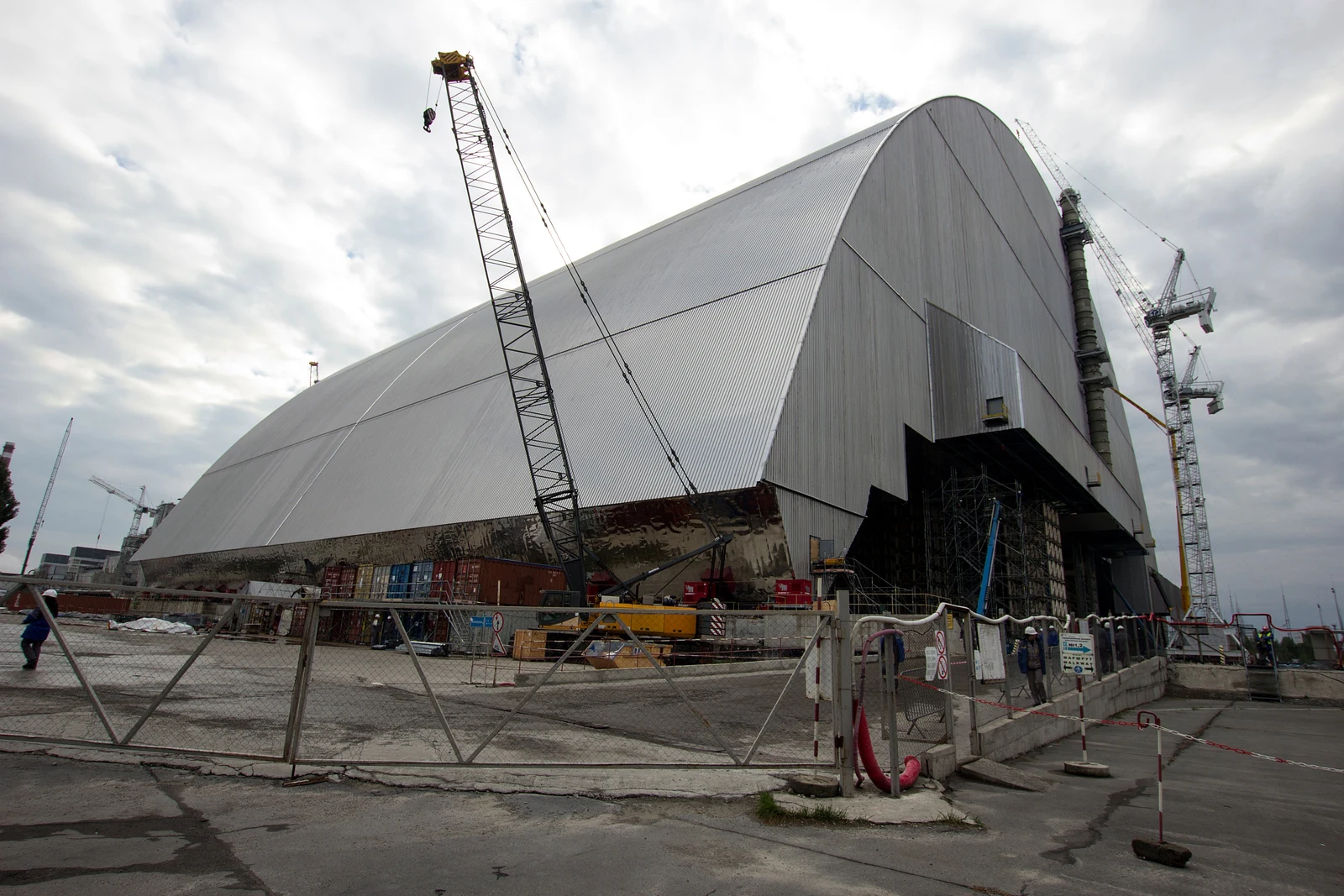
The New Safe Confinement is the steel arch, completed in 2019, that seals the radioactive remains of Reactor Unit 4 and makes it possible to dismantle the original sarcophagus built after the 1986 accident. A Russian drone struck it on February 14, 2025, damaging around 200 square metres of panels and punching a hole of roughly 15 square metres through the cladding — damage that compromised both of the structure's core functions, the EBRD said.
Kyiv puts the full restoration bill at approximately €500 million. Temporary repairs are already under way, and early engineering and procurement work worth up to €30 million, approved by donors in March 2026, is meant to produce a firmer cost estimate by the end of 2027. The main restoration works are scheduled to start in early 2028, with the confinement's full functionality restored by 2030 — the deadline the EBRD says matters, because exposed cladding risks corrosion of the steel arch inside its 100-year design life.
"I would like to thank France for hosting the high-level donor conference in Paris dedicated to the restoration of the New Safe Confinement," said Denys Shmyhal, Ukraine's Vice Prime Minister and Minister of Energy. "In February 2025, the confinement was damaged by a Russian drone. Approximately €500 million is needed to restore the facility."
The Paris pledges build on an earlier commitment by the G7 — Canada, France, Germany, Italy, Japan, the United Kingdom and the United States — to provide €260 million for urgent repairs, announced at the IMF and World Bank Autumn Meetings, where G7 finance ministers also called on the wider international community to contribute. France added a further €30 million as host, according to the Chornobyl plant's own report of the conference. The EBRD has led international efforts at the site since 1995, mobilising more than €2.5 billion.
Why it matters: the arch is the barrier between the remains of the world's worst nuclear accident and the environment, and its repair clock is now measured against corrosion, not just money. Paris closed more than half the estimated funding gap in a single day — the rest has to arrive before the engineering window does.
*Sources: European Bank for Reconstruction and Development (primary — high-level donor pledging conference release, November 2026, and G7 commitment release); Chornobyl Nuclear Power Plant official report of the conference; EnergyNews.pro conference report.*
The hero image shows the New Safe Confinement at the Chornobyl Nuclear Power Plant in October 2016 (Tim Porter via Wikimedia Commons, CC BY-SA 4.0).