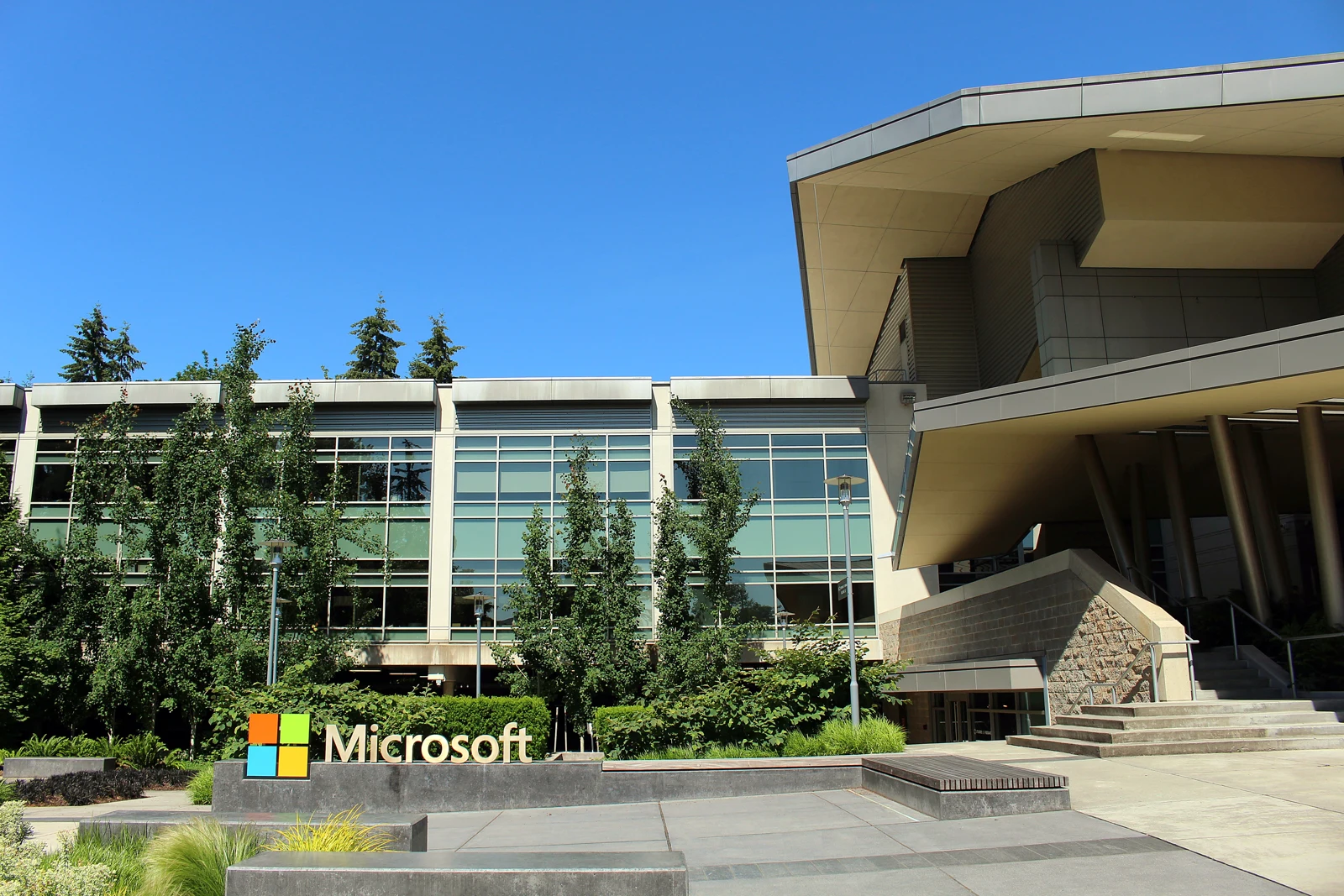
Redmond, Washington — A global Microsoft 365 outage that began on Thursday, November 12, 2026, disrupted Outlook email, Teams and other Microsoft services for users worldwide into a second day, and Microsoft spent Friday, November 13, 2026, restoring service in phases without declaring the incident over. Microsoft tracked the disruption under incident references EX1550543 for Exchange Online and MO1550821 for the wider Microsoft 365 suite, and said features that depend on Exchange Online and email were at the centre of the failure, while services that do not rely on it kept working. (File photo: the Microsoft campus in Redmond, Washington.)
The scale showed up in the outage trackers first. Downdetector recorded more than 130,000 reports of Outlook problems in the United States at the Thursday peak, around 1:00 p.m. ET, and still more than 25,000 at 9:30 p.m. ET, with reports across the Asia-Pacific region, including India, Australia and Japan, early Friday local time. Microsoft said a large number of its servers became unexpectedly unavailable after failing automated health checks, which overloaded the rest of the system, and the company extended its email timeout window to 48 hours to protect delayed messages during recovery. Affected workloads included Outlook on the web, desktop and mobile, Teams features tied to calendars and Exchange, SharePoint-connected features and Copilot functions that rely on Outlook, calendar or Microsoft 365 files.
On the cause, Microsoft was consistent across its updates: executive Charles Lamanna said there was no indication malicious activity or a cyberattack caused the outage, and Australia's Home Affairs and Cyber Security Minister Tony Burke relayed the same position. Through Friday, Microsoft reported traffic-optimization measures producing positive results, capacity gradually being restored across affected regions and broader improvements in North America and Europe — phased recovery language, not an all-clear, in the updates reviewed for this story.
Why it matters: Outlook and Teams are load-bearing infrastructure for offices, schools and governments, so a two-day Exchange-centred failure is not an inconvenience story — it is a reminder of how much of the working world runs through one company's servers, and how slowly a system that large can be brought back.
Sources: Microsoft service-health updates for incidents EX1550543 and MO1550821, November 12-13, 2026 (primary origin — the affected services, the server health-check failure and the recovery sequence); Reuters via BusinessWorld, November 13, 2026 (the roughly 10-hour Thursday disruption, the Downdetector peaks and Minister Burke's statement); Malwarebytes News and GHacks, November 13, 2026 (independent timelines of the second-day continuation and Microsoft's no-malicious-activity position).