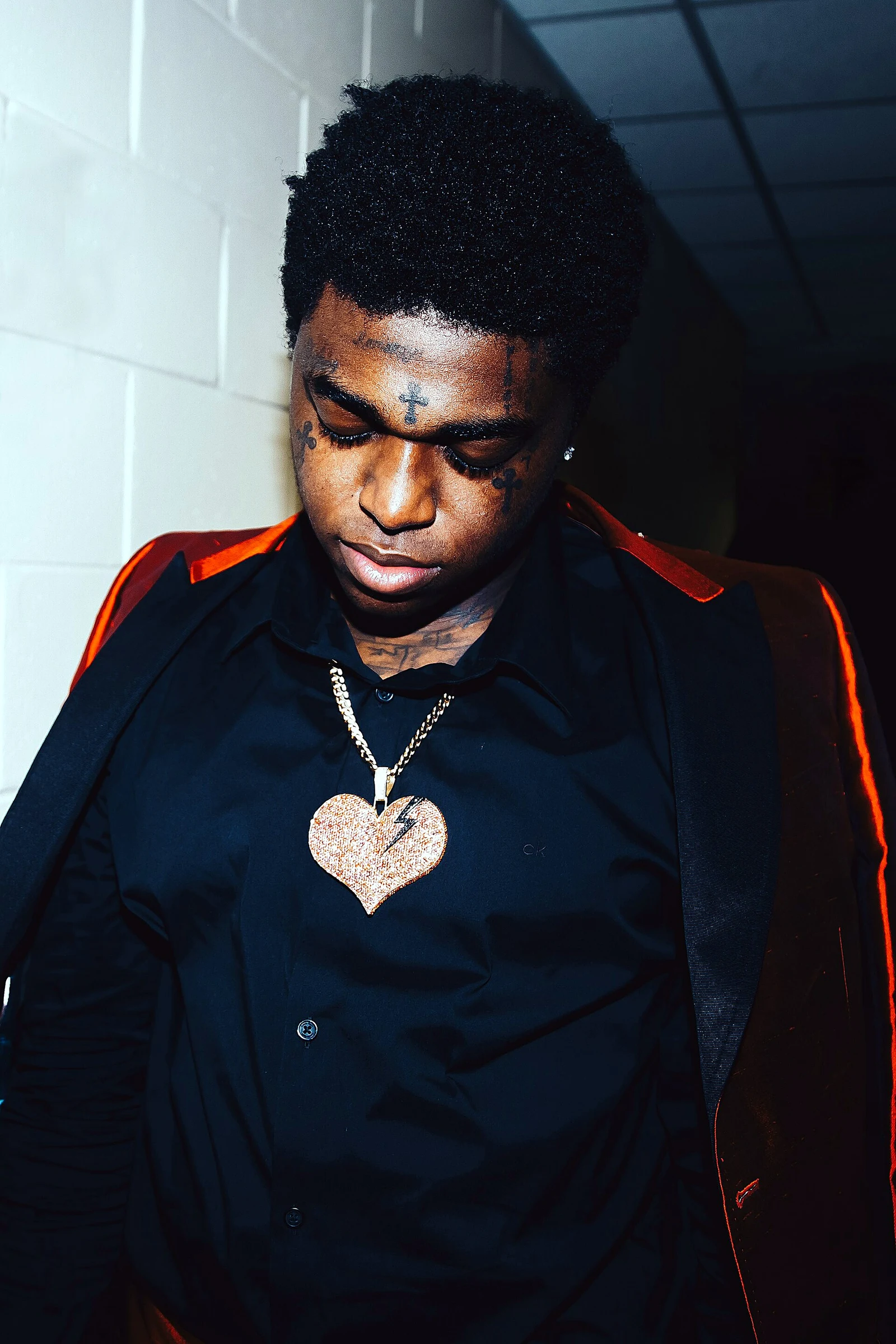
Kodak Black is in Grand Theft Auto VI twice. The game's launch credits, reported in full by AllHipHop on November 20, list the Pompano Beach rapper in the cast as himself — and separately credit him as the host of The Sniper of La Perle, an in-game Haitian music station presented by Haitian producer and DJ Michaël Brun. It is the most personal credit in a launch week full of them: not a character, not a one-song licence, but the artist himself, holding down a whole station.
The station is the story. Per AllHipHop's station-by-station read of the credits, The Sniper of La Perle pairs Kodak's own records — "Haitian Scarface," "300 Blackout" and "Haiti," his collaboration with John Wicks — with Haitian acts including Barikad Crew and Alan Cavé, and reaches wider with Wyclef Jean's "Guantanamera," featuring Ms. Lauryn Hill, Celia Cruz and Jeni Fujita. HipHopDose's independent credits report adds "Tet Kale Bobis," a Kodak Black and Michaël Brun collaboration, to the station's programming. Vice City has always been a mirror of South Florida; this station is the part of the mirror that speaks Haitian Creole's musical language back to it.
His footprint does not stop at the host chair. Kodak also appears on Grand Theft Auto VI: The Album — the 34-track Rockstar Games and Atlantic Records collection released alongside the game — with "Let's Rock," a collaboration with Don Toliver. And his catalogue runs across Vice City Rap Radio, the station hosted by JT and DJ Stevie J: "Super Gremlin," "No Flockin'" and "Skrilla" all appear in its mixes, alongside "Roll in Peace," his collaboration with XXXTENTACION, in Stevie J's set. Few artists are present in the game as a face, a voice, a host and a catalogue at the same time.
The credits are Rockstar's own document, and they settle a question that had trailed the launch. Kodak's involvement had previously been confirmed only in general terms — a social-media video with his attorney Bradford Cohen established that he was in the game without naming a role. The published credits answer it precisely, and they also mark the boundary of what is known: they do not establish where his character appears, what missions he touches, or how much hosting audio he recorded, and BIA808 is not claiming otherwise.
He is one name in a wider discovery cycle that has defined GTA VI's first days. JT is credited as DJ JT on Vice City Rap Radio, a story BIA808 published this morning; Denzel Curry plays the character DWNPLY; Freddie Gibbs and The Alchemist's "The Safe Trap" podcast surfaced in the same credits wave; and Doja Cat has publicly called out Rockstar over her music not being in the game at all — the absence that makes a double credit like Kodak's read even bigger by contrast.
Why it matters: radio is GTA's memory machine — it is how the game tells you where you are. Handing a full station to a Haitian-American artist from Pompano Beach, and letting him programme it with the music he actually comes from, is Rockstar programming Vice City's real demographics into the dial. Players will argue about the track lists for years. The Sniper of La Perle is the argument Kodak Black gets to host.