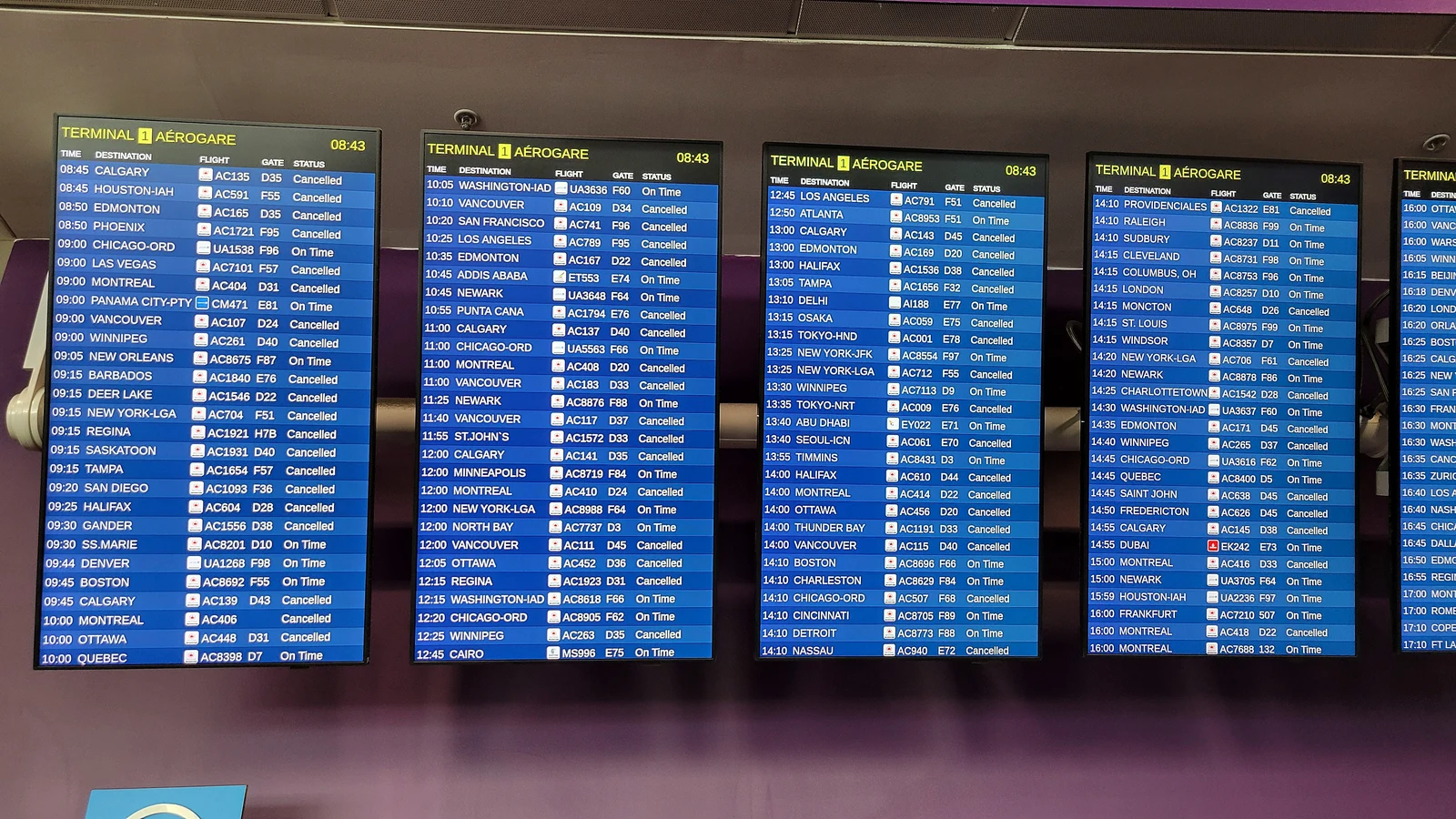
Washington, D.C. — The ground stop is over. The weekend it wrecked is not. (File photo: a departure board showing cancelled flights at Toronto Pearson International Airport during a 2025 work stoppage.)
More than 1,300 flights scheduled for Saturday, November 14, 2026, had already been cancelled as a result of Friday's nationwide Federal Aviation Administration ground stop, according to FlightAware figures reported by TravelPulse. The cancellations are the tail of Friday's failure, not a new shutdown: aircraft and crews ended Friday out of position across the United States, and airlines spent the night repositioning both for a Saturday schedule that was already thinner than planned. Early counts vary by tracker and by the hour they were captured — Flightradar24's Friday-night roundup also put Saturday cancellations above 1,300, with further cancellations already listed for Sunday — so the final Saturday toll will keep moving.
Friday's numbers explain the hangover. The FAA's Air Traffic Control System Command Center put the ground stop in effect shortly before 4:00 p.m. ET on Friday, November 13, and it held for more than four hours — the agency lifted it at 8:15 p.m. ET — after widespread telecommunications issues hit multiple air traffic control centres. Departures were halted from coast to coast while flights already in the air continued to their destinations. As of 9:00 p.m. ET Friday, FlightAware counted more than 9,000 flights within, into or out of the U.S. delayed and another 6,275 cancelled.
A nationwide ground stop is extremely rare — the last one before Friday came in January 2023, over a failure in the pilot-alert system. TravelPulse's advice for the weekend is the practical part of this story: travellers with Saturday or Sunday bookings should check their flight status with their airline before heading to the airport, because a flight that survived Friday can still be cut while its aircraft or crew catches up.
Why it matters: Friday's stop was a four-hour failure in the backbone every U.S. departure depends on, but its cost is being paid on Saturday — by weekend travellers, by fans and teams moving around a full sports calendar, and by an airline system that needs days, not hours, to put its planes and people back where the schedule assumes they are.