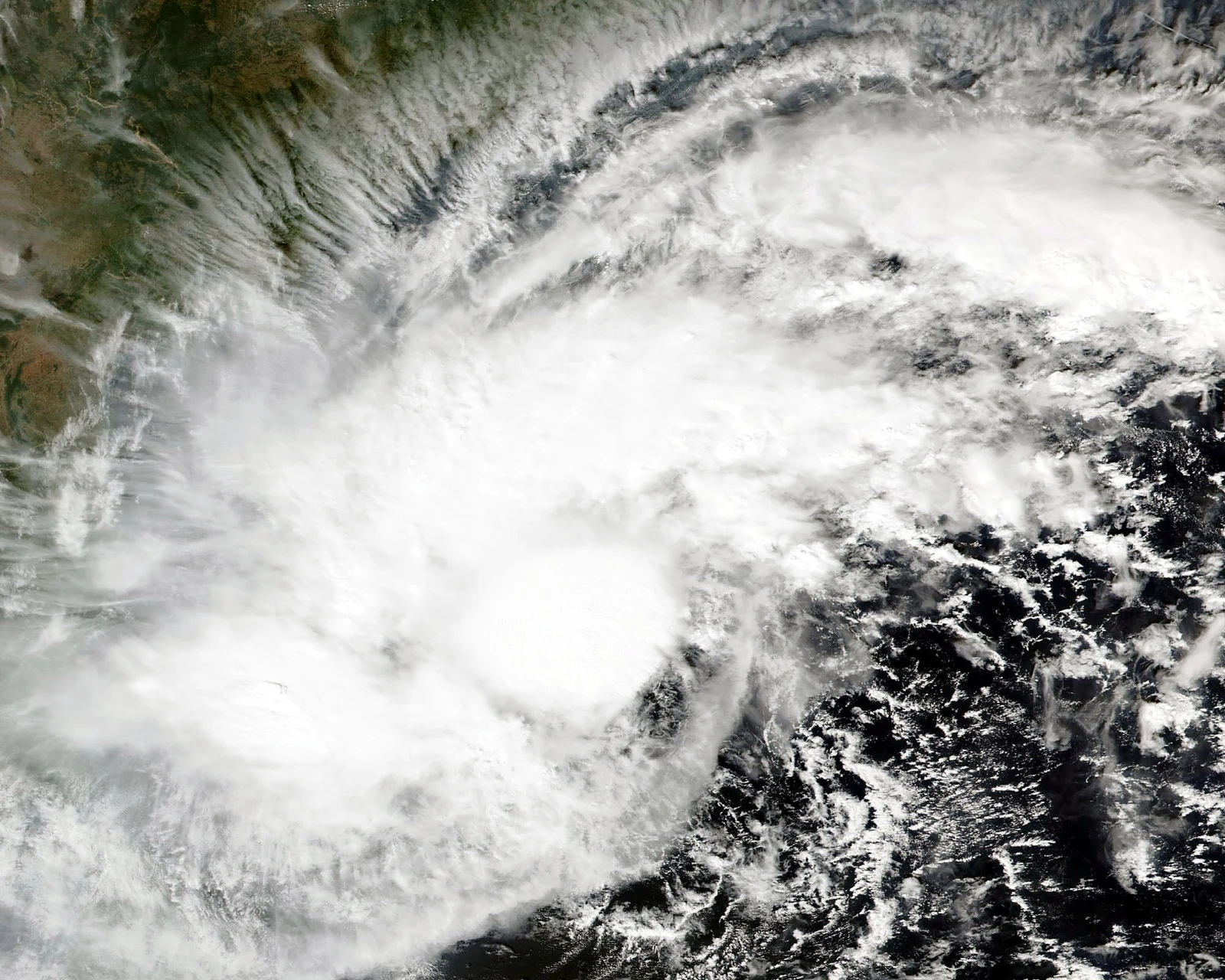
Bay of Bengal — Severe Cyclonic Storm Akvan moved north over the Bay of Bengal on Wednesday, November 18, 2026, and India's national weather bureau now expects it to come ashore between Narsapur in Andhra Pradesh and Puri in Odisha by noon on Friday, November 20.
The India Meteorological Department's late bulletins on Wednesday put the storm at 13.8°N, 85.3°E at 8:30 p.m. IST — about 480 kilometres southeast of Narsapur and 610 kilometres south of Gopalpur — moving north at about 10 km/h with maximum sustained winds of 90 to 100 km/h gusting to 110. The IMD expects Akvan to strengthen slightly over the sea on Thursday, to 100 to 110 km/h gusting to 120, and to cross the coast as a severe cyclonic storm at 90 to 100 km/h gusting to 110.
The warnings are already at their third-highest level. The IMD raised the north Andhra Pradesh, Yanam and south Odisha coasts to a cyclone warning — a red message — on Wednesday afternoon, and wants people living in coastal huts moved to safer places. Its forecast carries a storm surge of 0.5 to 1 metre above the tide in low-lying parts of West Godavari, Konaseema, Kakinada, Visakhapatnam, Vizianagaram and Srikakulam districts in Andhra Pradesh and Ganjam and Puri districts in Odisha, with heavy to very heavy rain and isolated extremely heavy falls of 21 centimetres or more over coastal Andhra Pradesh and south Odisha on Thursday and Friday. Fishing in the west-central Bay of Bengal is suspended until Saturday morning.
Wednesday also rewrote the forecast itself. Until Wednesday morning, the IMD had expected a crossing between Nellore and Visakhapatnam as a very severe cyclonic storm at 120 to 130 km/h gusting to 145. Through the day it shifted the landfall stretch north into Odisha and lowered the expected intensity to a severe storm — a revision that landed closer to independent forecasters such as Skymet, which had doubted Akvan would reach the very severe category at all. Every figure in this story is a forecast, not an event: the next IMD bulletins govern.
Why it matters: two states' coastlines have roughly 40 hours to prepare for a landfall whose track and strength have already moved once — and the districts in the surge zone are some of the most densely settled on India's east coast.
Sources: India Meteorological Department National Bulletins, November 18, 2026 (to No. 26, 11:00 p.m. IST); Daily Jagran live coverage (November 18, 2026); Hindustan Times reporting via The Library Estate (November 18, 2026).