Washington, D.C. — The United States has won court authorization to seize or restrain more than $1.2 billion in cryptocurrency stolen from Binance, the world's largest crypto exchange, in an October attack the FBI attributes to North Korean military hackers.
The Justice Department announced the action on Thursday, November 12, 2026, in a release titled 'Justice Department Announces Actions to Disrupt North Korea's Massive Theft of Cryptocurrency.' According to the department, on or about October 29, members of the North Korean military — a hacking programme the FBI calls 'TraderTraitor' — stole more than $6 billion in virtual assets from Binance. Binance's own November 3 incident report put the figure higher, at about $6.34 billion, and the exchange said it had committed more than $6.34 billion of company funds to cover affected assets.
Combined U.S. government and private-sector efforts have frozen more than $2.7 billion of the stolen funds so far, and the department has now obtained court authorization covering more than $1.2 billion of that frozen pool. Assistant Attorney General A. Tysen Duva credited the department's Computer Crime and Intellectual Property Section with moving fast enough to 'immediately halt about half of this historic breach.' Principal Deputy Assistant Attorney General M. Scott Proctor said the department would use its tools to seize and return North Korea's alleged illicit gains, and U.S. Attorney Jeanine Ferris Pirro highlighted the seizure figure in the same announcement.
The department says the work is not finished: the attackers are still laundering funds through cross-chain bridges, mixers and exchanges, and tracing and forfeiture proceedings continue. A court authorization to seize or restrain is not a completed recovery — the release does not say how much has actually been seized, what assets make up the total, or when any forfeited funds might be returned.
The same announcement carried a second North Korea action: the FBI said it had seized cloud infrastructure behind 'FaceStealer,' a separate scheme that used hijacked video calls and deepfakes to steal more than $400 million over 18 months.
The other side: North Korea denied responsibility for the Binance hack on November 3. U.S. officials say Pyongyang's crypto theft programme helps fund the regime and its weapons programmes — the stated reason Washington is pursuing the money so aggressively.
Why it matters: the FBI has described the Binance theft as the largest cryptocurrency heist on record, and the $1.2 billion court order is the clearest sign yet that authorities can freeze stolen crypto at scale. But less than half the haul is frozen, none of the legal process is finished, and whether victims are ultimately repaid from seized funds remains an open question.
Sources: U.S. Department of Justice, Office of Public Affairs (press release, November 12, 2026); Associated Press (November 2026); CoinDesk (November 12, 2026); Binance incident report (November 3, 2026), as reported by PYMNTS and The Block.
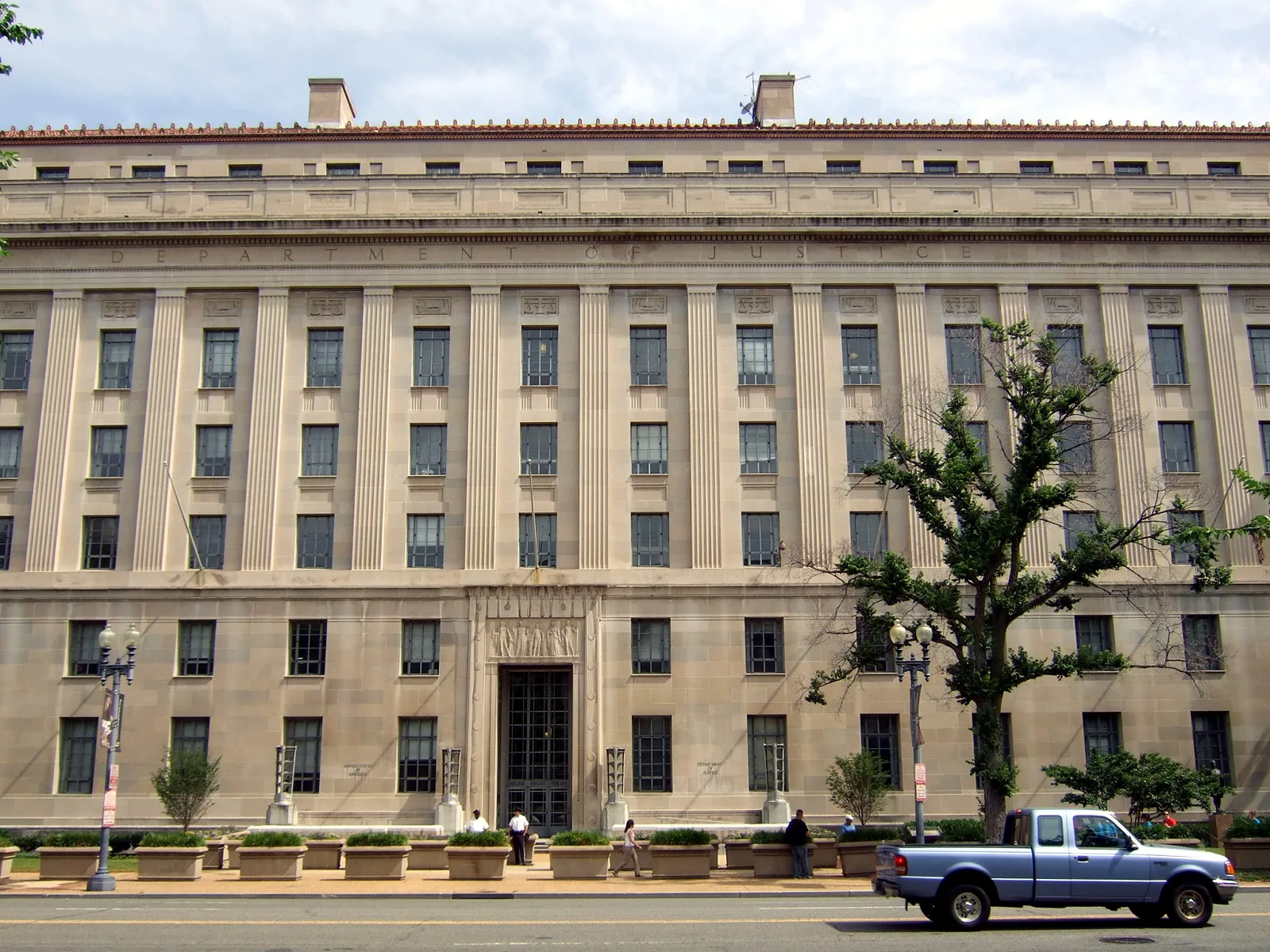
The hero image shows the Robert F. Kennedy Department of Justice Building in Washington, D.C. (Baseball Watcher via Wikimedia Commons, CC BY-SA 3.0).