Toronto, Ontario — A Toronto hospital research centre is taking a model built to move people off the street and into housing, and trying to take it national.
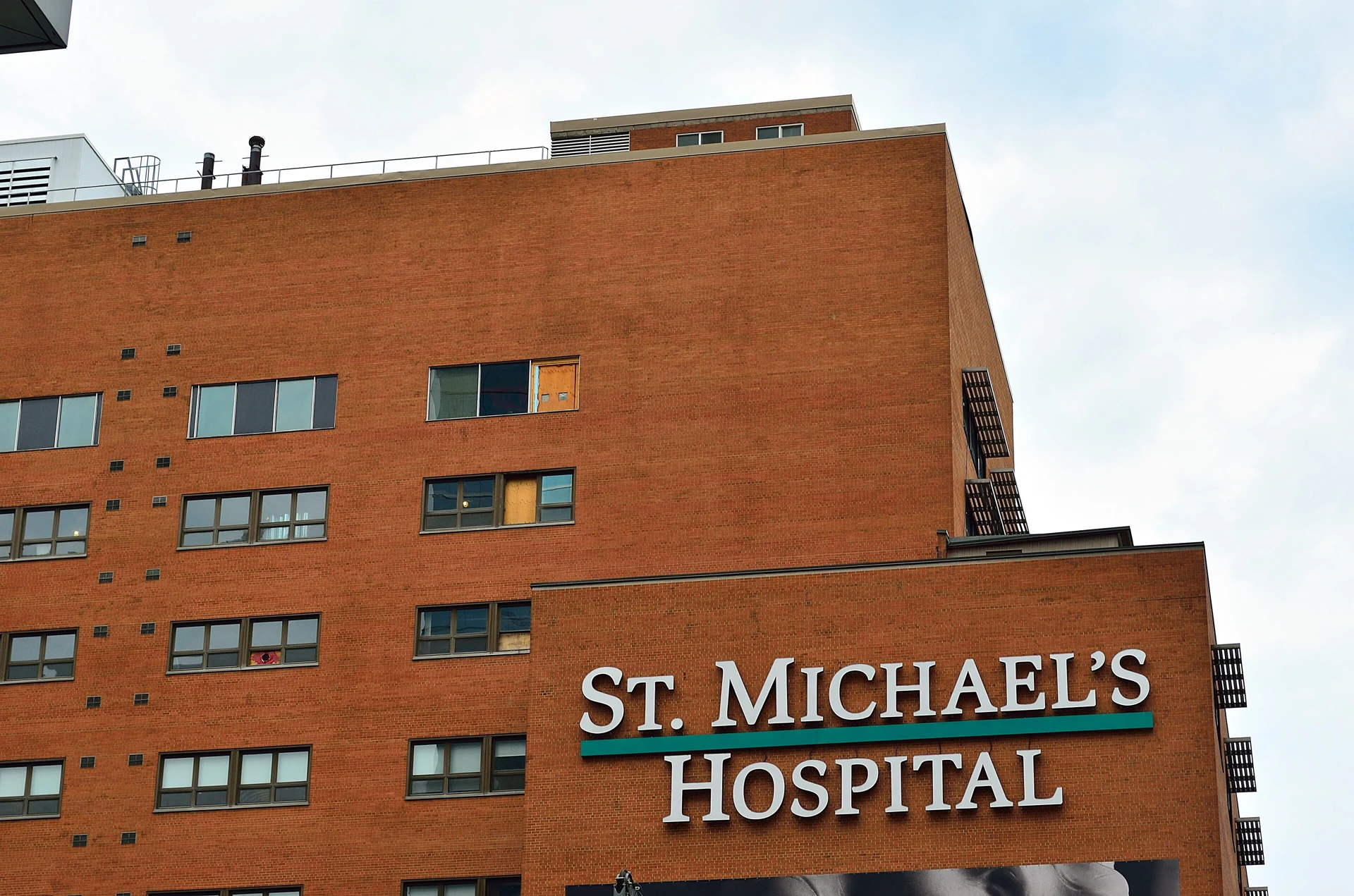
On Tuesday, November 17, 2026, in Toronto, Ontario, the MAP Centre for Urban Health Solutions at St. Michael's Hospital launched UNHOUSED, a $200 million national campaign to expand a housing-plus-supports model across Canada. St. Michael's is part of Unity Health Toronto. The campaign is anchored by a $25 million lead donation from the John Lederer Family Foundation.
The idea at the centre of the campaign is not housing alone. MAP says the model pairs access to housing with integrated, wraparound supports for people transitioning from street homelessness, helping them achieve lasting housing stability and well-being. In the centre's description, that means affordable housing, targeted social support and access to health care, delivered at the right level and at the right time — including for people with complex needs.
"We know what it takes to drive real, sustainable change, and our research shows what works," said Dr. Stephen Hwang, the UNHOUSED lead, a senior scientist at the MAP Centre and a Canada Research Chair. "We're seizing this moment and hope others will join us in this monumental effort."
The Toronto model UNHOUSED wants to scale already exists. The Slaight Family Housing Lab is running in Toronto after an earlier $25 million donation from The Slaight Family Foundation to MAP and United Way Greater Toronto in March 2026, separate from the new campaign. The foundation's own account says the lab puts MAP's research into practice with 300 people living on the street and others with complex needs, helping them move into housing with wraparound supports, while strengthening services intended to improve outcomes for more than 16,000 other people experiencing homelessness. MAP says UNHOUSED will tailor and scale that approach city by city, with local communities and partner agencies, to help thousands move from street homelessness to safe, supportive housing.
The launch follows strategic and business analysis by BCG Canada on scaling the Slaight approach, according to MAP. The new gift is from John A. Lederer through his family foundation. "It's time for a new Canadian strategy," Lederer said in the announcement. "Other countries are already proving it can be done. Now, it is time to add Canada to that list."
MAP framed the launch against a worsening national picture, and against a federal commitment it described as a historic plan to end homelessness within 10 years. The announcement states that homelessness in Canada has more than doubled in the past eight years, and that unsheltered homelessness — living outside or in places not meant for human habitation — has quadrupled. That doubling figure is the campaign's own claim in its release; it is reported here as MAP stated it, not as an independently recalculated count. Federal point-in-time data do confirm the scale in broad terms: Housing, Infrastructure and Communities Canada's Everyone Counts 2025 enumeration counted 65,000 people experiencing homelessness on a single night across 75 Canadian communities.
Evan Solomon, the Member of Parliament for Toronto Centre, said Toronto research and community partnerships are helping shape solutions across the country, and that the campaign is about helping people stay housed and move forward with dignity. MAP director Dr. Nav Persaud added: "Ending homelessness is an ambitious goal, but it's achievable."
Why it matters: chronic and street homelessness is where the health system, the housing system and the street meet — people cycle through emergency departments, shelters and encampments when housing and support do not arrive together. UNHOUSED is a test of whether a research-backed Toronto model, funded first by philanthropy, can be adapted by local partners in other Canadian cities at a scale large enough to change that cycle. The campaign's information page is at maphealth.ca/unhoused.