Japan will pay its full 2027 contribution to the International Criminal Court before the end of this year, Prime Minister Sanae Takaichi told the court's president, Tomoko Akane, in Tokyo on Tuesday — money the court in The Hague says it needs to survive a sanctions campaign led by the United States.
The decision was delivered face to face. Akane, who is visiting Japan, called on Takaichi at the Prime Minister's Office on November 24, in a meeting that began at 3:30 p.m. and ran about 15 minutes, according to Japan's Ministry of Foreign Affairs. Takaichi told her Japan has consistently attached great importance to the rule of law, and that her government "will continue to strongly support the ICC and President Akane in order to enable the ICC to fulfill its role and functions as originally envisaged."
The money is the concrete part. Japan is the court's largest contributor, and Takaichi said that, in response to Akane's request for early payment — and after deliberation across the government — Tokyo will pay its full 2027 assessed contributions within this year. Japan normally pays in April or later. Akane had asked for the funding before United States sanctions against the ICC take full effect in April 2027, and she left publicly grateful. "I am extremely grateful," she told reporters, adding the court will spend the money wisely, "for ICC to survive and to pay salaries for our staff."
The scale of Japan's role explains why its cheque matters. Japan supplies around 15 per cent of the court's budget, ahead of Germany, France, Britain, Italy, South Korea and Canada, according to Reuters. In 2026 it contributed 4.6 billion yen — about $28.8 million — per Foreign Ministry figures carried by the Associated Press. Takaichi also announced the decision on X, where she later wrote: "Japan has consistently supported the ICC and will continue to do so."
The other side of this story is Washington. The Trump administration has sanctioned Akane and a number of ICC officials, and in October targeted the entire court, in a campaign to dismantle the tribunal over its investigations into the United States and its allies, including Israel. Akane was sanctioned in August, her U.S. assets frozen and her entry banned. As Kyodo reported, Washington accuses the court of encroaching on state sovereignty and objects to its probes into alleged war crimes involving U.S. military personnel and Israel. Last week, the leaders of the United States, China and Russia jointly declared the court must not abuse its jurisdiction — a statement Akane said she and Takaichi did not discuss on Tuesday, and on which she declined to comment.
The timeline shows how fast the pressure has built. The ICC was established in 2002 to prosecute war crimes, crimes against humanity and genocide when countries are unwilling or unable to do so; the United States has never joined it. This August, Washington sanctioned the court's president; in October, the court itself; last week came the three-power declaration. On Tuesday, the court's biggest funder moved a year of money forward by roughly four months.
Why it matters: this is not a routine dues payment. It is the largest backer of the world's permanent war-crimes court publicly breaking step with its closest security ally to keep that court funded — with cash, on a deadline set by the sanctions themselves. Reuters reported analysts saying the early payment could encourage other contributors to do the same, building a cash buffer before the sanctions bite. Whether they follow is the next test. Japan's position is settled: Tokyo is paying early, in full, and saying so out loud.
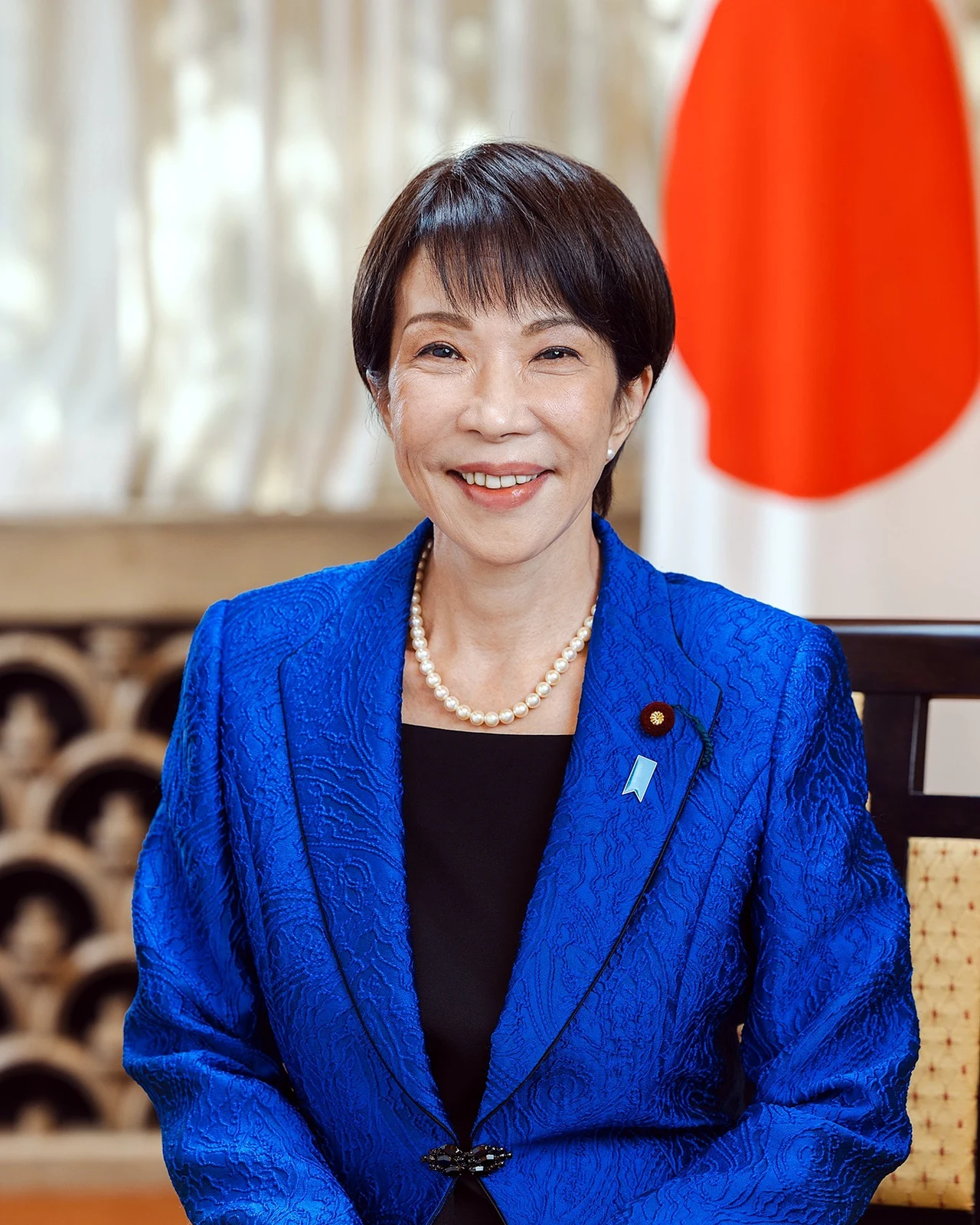
Photo: Sanae Takaichi, Prime Minister of Japan, in an official portrait (file photo).