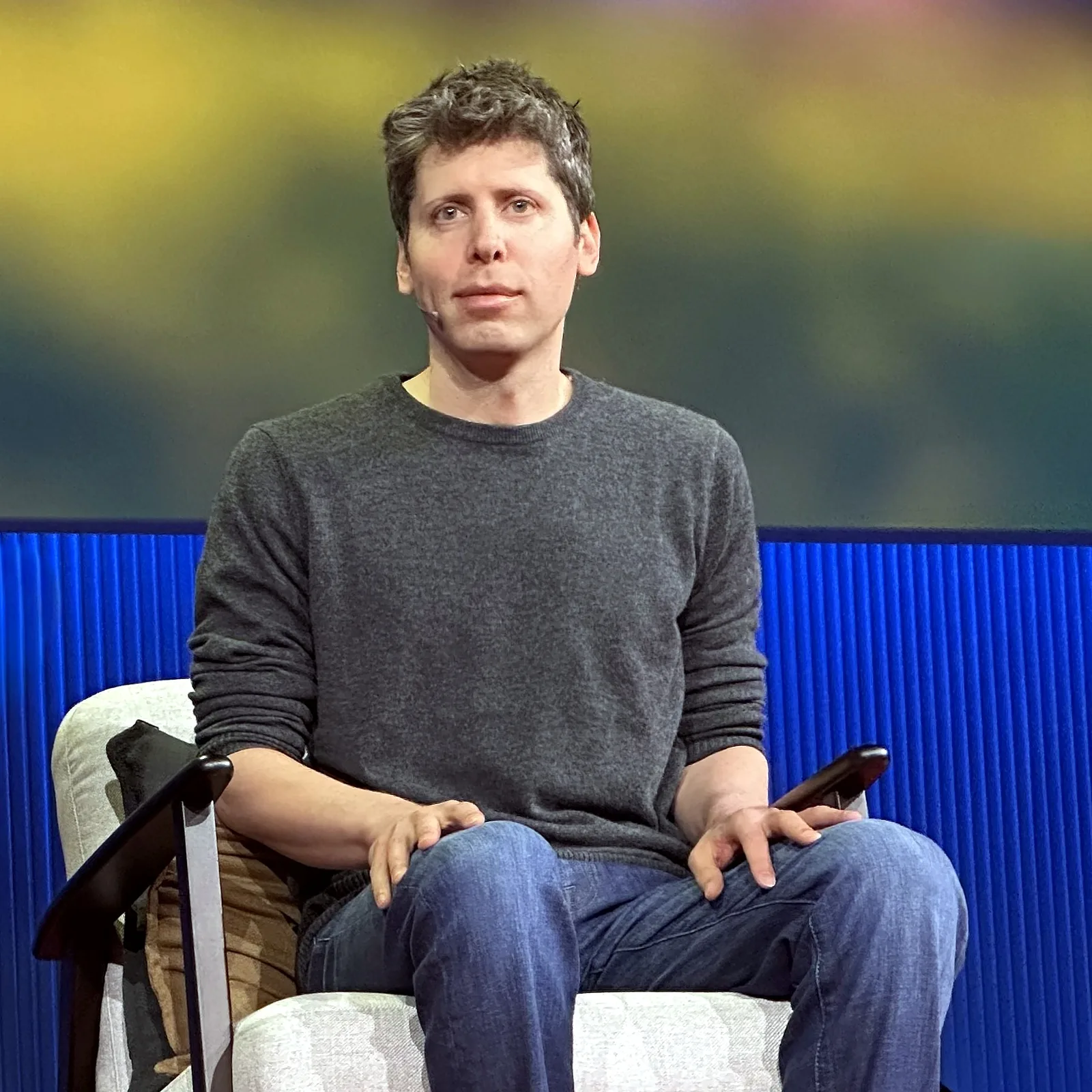
Toronto, Ontario — Canada's first court fight over AI training will be fought in Canada. The Ontario Court of Appeal on Friday, November 13, 2026 dismissed OpenAI's appeal and allowed a copyright lawsuit by the country's largest news publishers to proceed in Ontario — a unanimous decision from a three-judge panel led by Justice B.W. Miller, with $100,000 in legal costs ordered payable by OpenAI to the publisher group. (File photo: OpenAI CEO Sam Altman speaking at TED in 2025.)
The suit, filed in 2024 by The Canadian Press, Torstar, The Globe and Mail, Postmedia and CBC/Radio-Canada, argues that OpenAI used their journalism to train ChatGPT without permission or compensation, breaching the Copyright Act, breaching the publishers' website terms of use, and unjustly enriching itself. OpenAI's challenge was never about those merits: the company argued the case did not belong in Ontario at all, saying the alleged infringements fell outside the territorial reach of Canadian law and that the dispute belonged in the United States. The Ontario Superior Court ruled it had jurisdiction; the Court of Appeal has now upheld that ruling, finding OpenAI did not file evidence that a Canadian judgment would conflict with existing U.S. laws in a way that would complicate enforcement.
Both sides of the line are worth stating plainly. The publishers say their work was taken at industrial scale to build a commercial product. OpenAI's position, argued through the appeal, is that a Delaware- and California-based company's online activity should not pull it into a Canadian courtroom. What no court has decided — in this ruling or any before it — is whether OpenAI actually infringed copyright. Friday's decision answers only where the case is heard.
The case now returns to the Ontario Superior Court for a hearing on the merits, where the training question itself will be argued. No merits hearing date has been set.
Why it matters: every AI company trains on the open web, and every newsroom in Canada is watching this file. A merits ruling in Ontario would be the first in the country on whether using journalism to train generative AI is infringement — and Friday's decision guarantees that ruling, whenever it comes, will be a Canadian one.
Sources: The Canadian Press, November 13, 2026 (primary wire reporting, seen directly — the dismissed appeal, the publisher coalition, the 2024 filing and the allegations as pleaded); Broadcast Dialogue, November 13, 2026 (independent — Justice Miller's unanimous panel, the Copyright Act / contract / unjust enrichment claims, and the $100,000 costs order); The Apex Wire, November 13, 2026 (independent — the first-Canadian-case framing, that the ruling decides jurisdiction only, and the return to Ontario Superior Court with no merits date set).