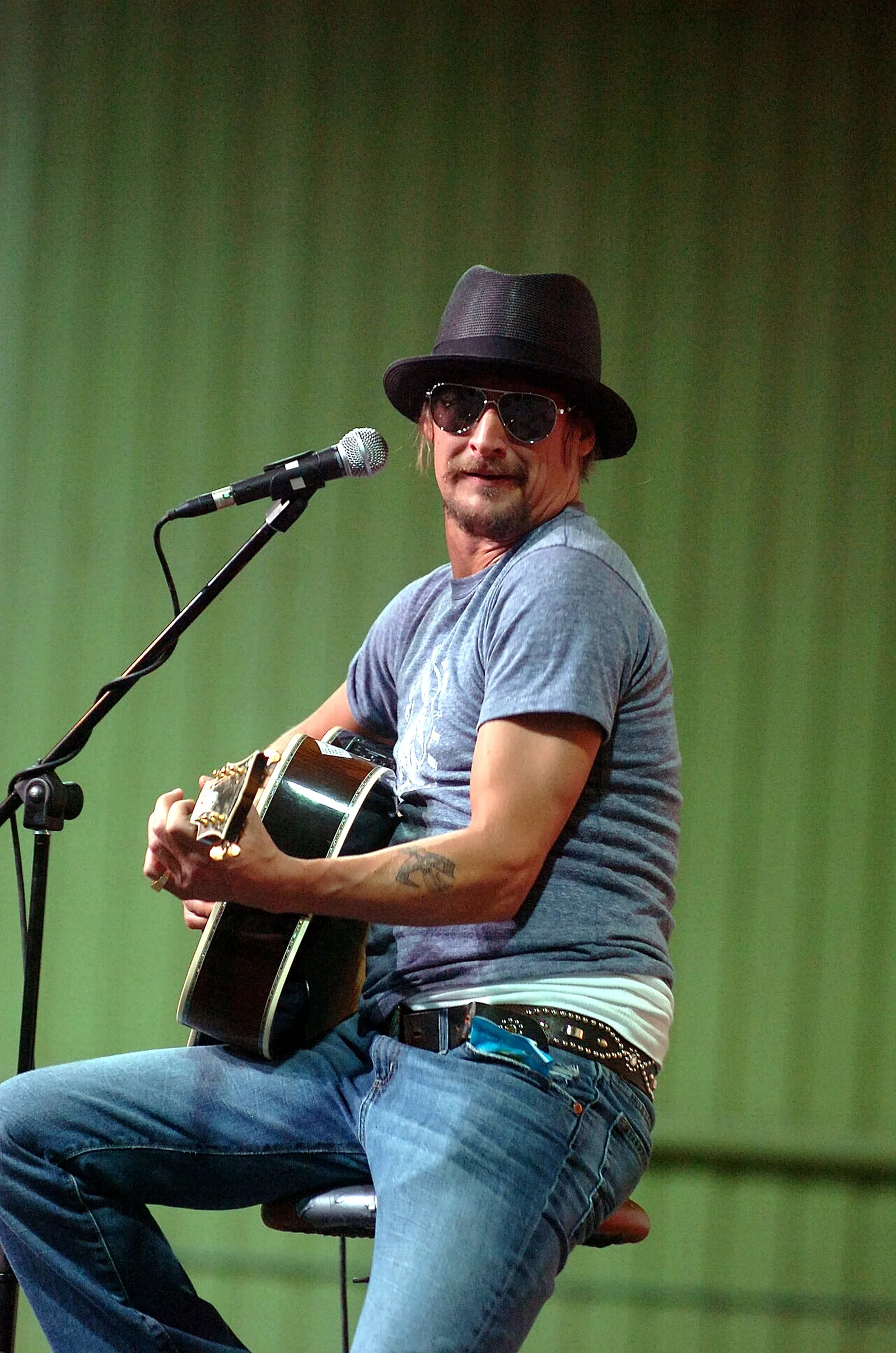
Nashville, Tennessee — A guitar tap, an elevator, and two completely different stories. Joshua Welch is suing Kid Rock's Big Ass Honky Tonk & Rock 'n' Roll Steakhouse in Nashville over an alleged December 2025 encounter, and the venue has formally denied wrongdoing, saying its security guards were justified in the force they used. The lawsuit, filed in March, surfaced on Tuesday, November 17, 2026, in TMZ's reporting; Rolling Stone obtained the suit itself. All of Welch's claims are allegations — none has been proven in court.
Welch's side, as the lawsuit tells it: he was at the bar with friends celebrating his recent college graduation when, passing the stage, he "lightly tapped the performer's guitar with the tip of his finger" — a moment his lawyer concedes was poor judgment. He attempted to touch the guitar a second time, and a bouncer, in the suit's words, became "disproportionately agitated" and began pushing him toward the elevator. Welch alleges three men beat him in the elevator, slammed him against its wall and threw him out when it reached the ground floor. He says his right ring finger was injured and required surgery about a month later.
His claims against the restaurant — not against Kid Rock personally — are assault and battery, negligence, negligent hiring and training, and false imprisonment.
The venue's side is in its formal answer to the court: its bouncers "were justified in the use of force, if any, to respond to the violence initiated by plaintiff," and the restaurant says it maintained the right to protect its employees and patrons from Welch's "aggressive actions." Kid Rock himself is not an individual defendant; he is involved in the bar's licensing, branding and promotions, with no stake in day-to-day operations or management. A case management hearing is set for January 11.
The bar — five floors, four stages and six bars at 3rd Avenue and Broadway, opened in October 2018 and operated by Steve Smith, the local figure behind Tootsie's and Honky Tonk Central — now has to defend a proportionality question in court: what response does a finger on a guitar justify?
Why it matters: celebrity-name venues sell the star's brand, but the liability sits with the room. This case will be decided on the venue's own filing and the elevator facts, not on Kid Rock's name above the door — and both sides have now put their version on the record.