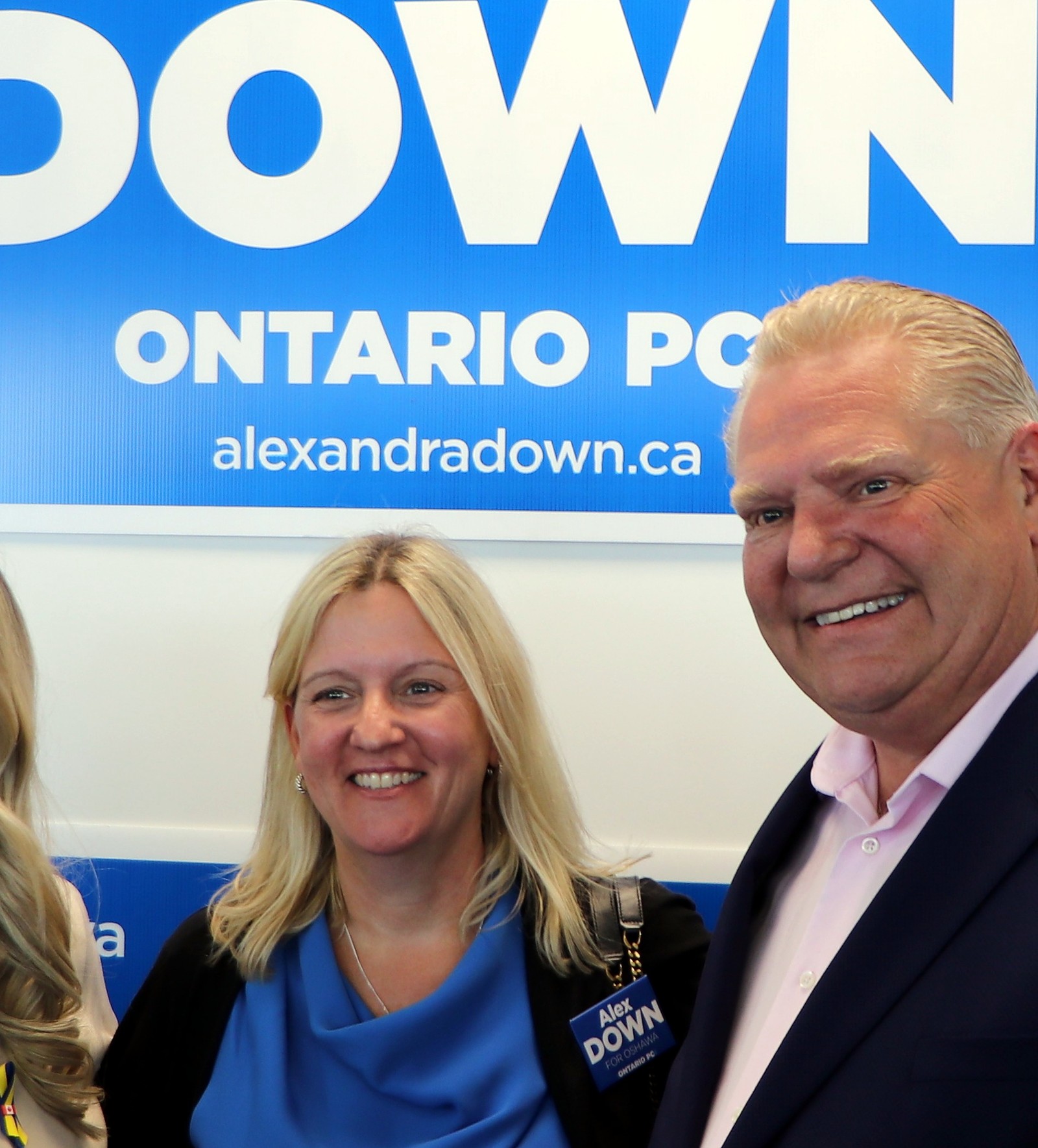
Ontario Premier Doug Ford and Unifor National President Lana Payne stood on the same side of the Brampton fight on Thursday, issuing a joint statement that asks Ottawa to drop emissions penalties on Canadian automakers — and ties any relief to Stellantis reversing the sale of its Brampton Assembly Plant.
"Together, we are calling on the federal government to exempt non-compliance penalties for passenger automobile greenhouse gas emission regulations for Canadian automakers," Ford and Payne said in the statement, issued November 26, 2026. "Companies that build in Canada with Canadian workers should get every advantage to succeed." Dow Jones Newswires framed the demand as a call to exempt automakers from Canada's industrial carbon tax; the statement itself targets the non-compliance penalties built into the federal passenger-vehicle emissions rules.
The pair argued those penalties will force companies that build in Canada to pay out billions in non-compliance costs over the coming years, mostly paid as credits to automakers who build no vehicles in Canada. They called the costs an "own goal" that helps U.S. President Donald Trump achieve his objective of putting every Canadian autoworker out of a job, at a moment when U.S. tariffs are already threatening the viability of Canadian auto operations.
The condition attached to the ask is the Brampton plant. Exempting Canadian automakers, Ford and Payne said, "must come with a firm commitment that automotive production will be preserved in Canada, including a full reversal of the sale of the Stellantis Brampton Assembly Plant." The plant, in Brampton, Ontario, employs about 2,000 workers, according to Dow Jones.
Stellantis has a tentative deal to sell the plant to a local defence firm — named in Globe and Mail reporting as armoured-vehicle maker Roshel Inc. — and has argued there is no financial case to keep the plant open amid hefty U.S. tariffs. Ottawa has already served the automaker a notice of default over Brampton, and officials from the federal and Ontario governments, Unifor and Stellantis remain in talks about possibly saving the factory. Industry Minister Mélanie Joly this week opened the door to possible federal financial help if Stellantis reverses course; a spokesman for Joly did not immediately respond to Dow Jones' request for comment on Thursday's demand.
The alliance itself is part of the story. A Progressive Conservative premier and the head of Canada's largest private-sector union do not issue joint statements often, and doing so raises the pressure on Prime Minister Mark Carney's government from two directions at once: the province that hosts the plants, and the union whose members work in them.
Why it matters: Brampton has become the test case for whether Canada can keep auto production at home while Washington pulls it south. Ford and Payne are now offering Ottawa a trade — regulatory relief for automakers, in exchange for a guaranteed future for the plant — and the federal government's answer will signal how far it is willing to go to keep Stellantis building in Canada.