Ottawa, Ontario — The House of Commons passed the federal government's 2026 budget on Thursday, November 19, 2026, approving the budget motion 162-151, with the division called at 5:15 p.m. local time.
The House of Commons Journals for the sitting record the moment precisely: at 5:15 p.m., under Standing Order 84(6), the Speaker interrupted the proceedings, the question was put on the motion, and it carried on Division No. 196 — 162 yea, 151 nay, with 16 members paired. The motion, sponsored by Finance Minister François-Philippe Champagne, was that the House approve in general the budgetary policy of the government.
The budget, titled "Masters of Our Destiny," was tabled on November 5, 2026. The Canadian Press reports it outlines billions of dollars in new borrowing and tax measures largely aimed at stimulating infrastructure construction and other capital projects, and it projects a $62.3-billion deficit for 2026-27. Champagne told a Senate committee this week that "confident countries invest," pointing to proposals that include a $36-billion productivity mega-deduction.
The other side was heard before the vote. Conservative Leader Pierre Poilievre criticised the scale of the borrowing and its affordability impact. NDP Leader Avi Lewis said his MPs would vote against, arguing the budget caters to big business. Bloc Québécois Leader Yves-François Blanchet criticised the Liberals' use of the "Maîtres Chez Nous" phrase. Parliamentary Budget Officer Annette Ryan published scrutiny reports this week raising red flags on total borrowing, while finding the government narrowly on track for its fiscal anchors.
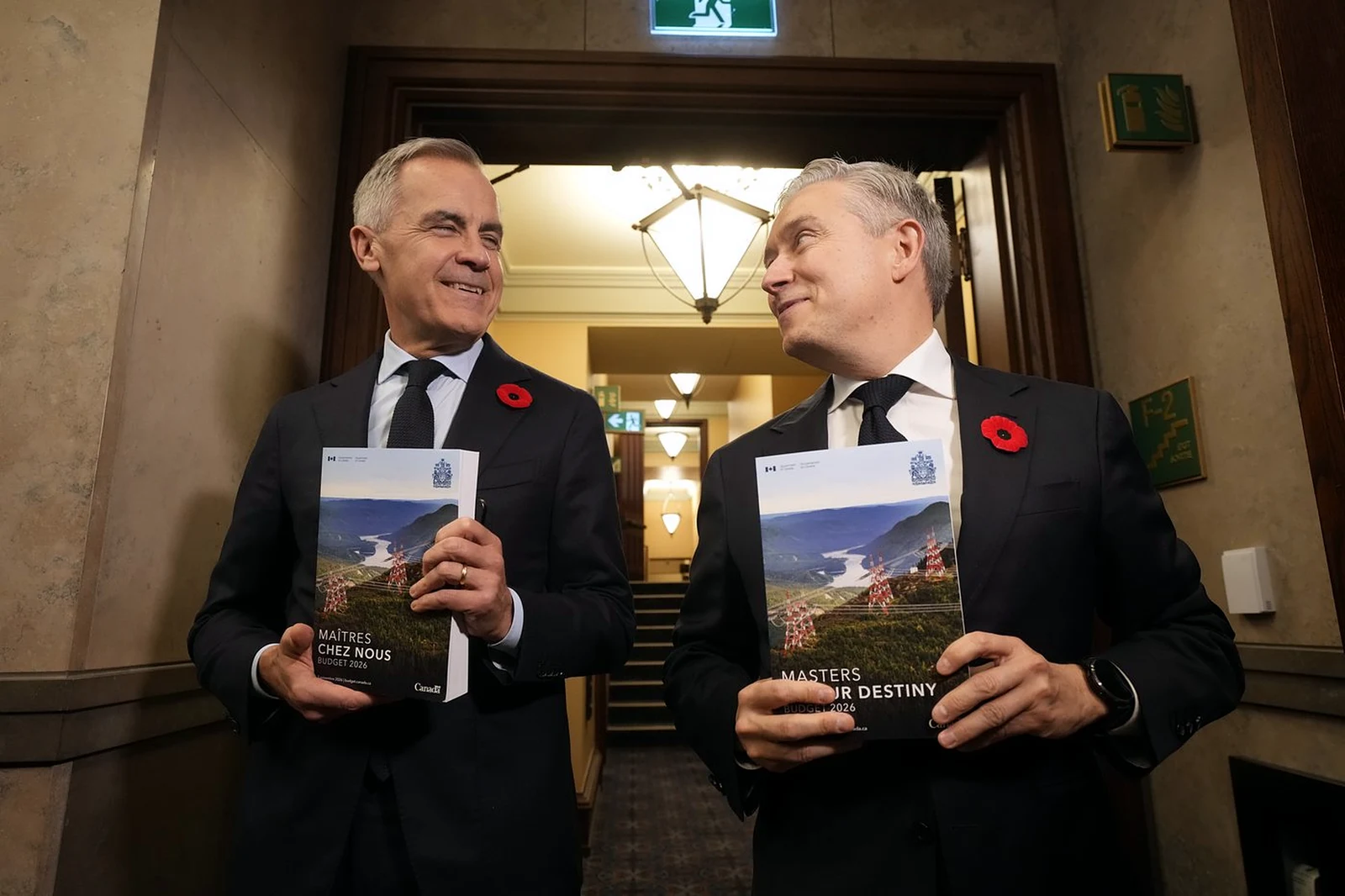
The Liberals carried the vote on their own: after a year of byelections and floor-crossings, the party holds a Commons majority, so the budget did not need another party's support. The photo with this story shows Prime Minister Mark Carney and Champagne holding copies of Budget 2026 on Parliament Hill on budget day, November 5.
Why it matters: passing the motion approves the budget's direction, but it does not enact a single measure. The government must still table one or more budget implementation bills, which face committee study, possible amendments and further votes in the Commons and the Senate before they become law.