The world's fastest-growing Ebola outbreak has crossed 12,000 confirmed cases — and the fighting around it is now pushing the responders out.
The Democratic Republic of the Congo's confirmed Ebola caseload reached 12,021, including 5,904 deaths, in the Health Ministry update reported Thursday, November 26, 2026, by the Associated Press and Reuters. The outbreak, declared in May 2026, is caused by the rare Bundibugyo virus, for which there is no approved vaccine or specific treatment, per the World Health Organization. AP calls it the fastest-growing Ebola outbreak in history and the deadliest of Congo's 17 outbreaks.
The outbreak has spread from one province to eight. Ituri province is the worst hit: WHO counted 7,946 cases and 3,751 deaths there alone as of November 17, when its tally for the whole country stood at 11,613 confirmed cases and 5,678 deaths. On November 18, WHO determined the outbreak remains a Public Health Emergency of International Concern, and its November 25 rapid risk assessment rated the overall risk very high in Congo, with more than 80% of new infections detected outside known contact lists.
This week the security situation cut directly into the response. About a dozen people, including two WHO personnel and Congolese health officials, were evacuated to Bunia after three days trapped in a hospital in Akwe, northeast of Bunia, amid intense crossfire, and WHO's Ebola team temporarily relocated from the Mongbwalu area, per AP and WHO incident manager Dr. Catherine Smallwood. On Thursday morning, fighting between the Congolese army and Convention pour la révolution populaire (CRP) rebels resumed in Iga-Barrière, a mining town about 25 kilometres north of Bunia, sending new waves of displaced people toward Bunia, per AP.
The response side is scaling up on paper: WHO and the Africa CDC this week unveiled an updated continental preparedness and response plan running November 2026 to May 2027, and WHO says US$1.576 billion is needed over the next six months, per Reuters. Launching the plan, WHO Director-General Tedros Ghebreyesus said it will 'put communities at the centre, strengthen early detection and care,' adding: 'We must sustain our efforts, overcome access and security challenges, and work together with urgency and solidarity to end this outbreak.' No CRP statement was carried in either wire's reporting.
Why it matters: an outbreak with a case-fatality rate near half, no vaccine and no specific treatment is now growing fastest exactly where armed conflict blocks contact tracing and empties treatment centres. The counts are provisional and retrospectively revised, per WHO — but every origin read for this story, WHO's own publications and both wires, agrees on the direction and the scale.
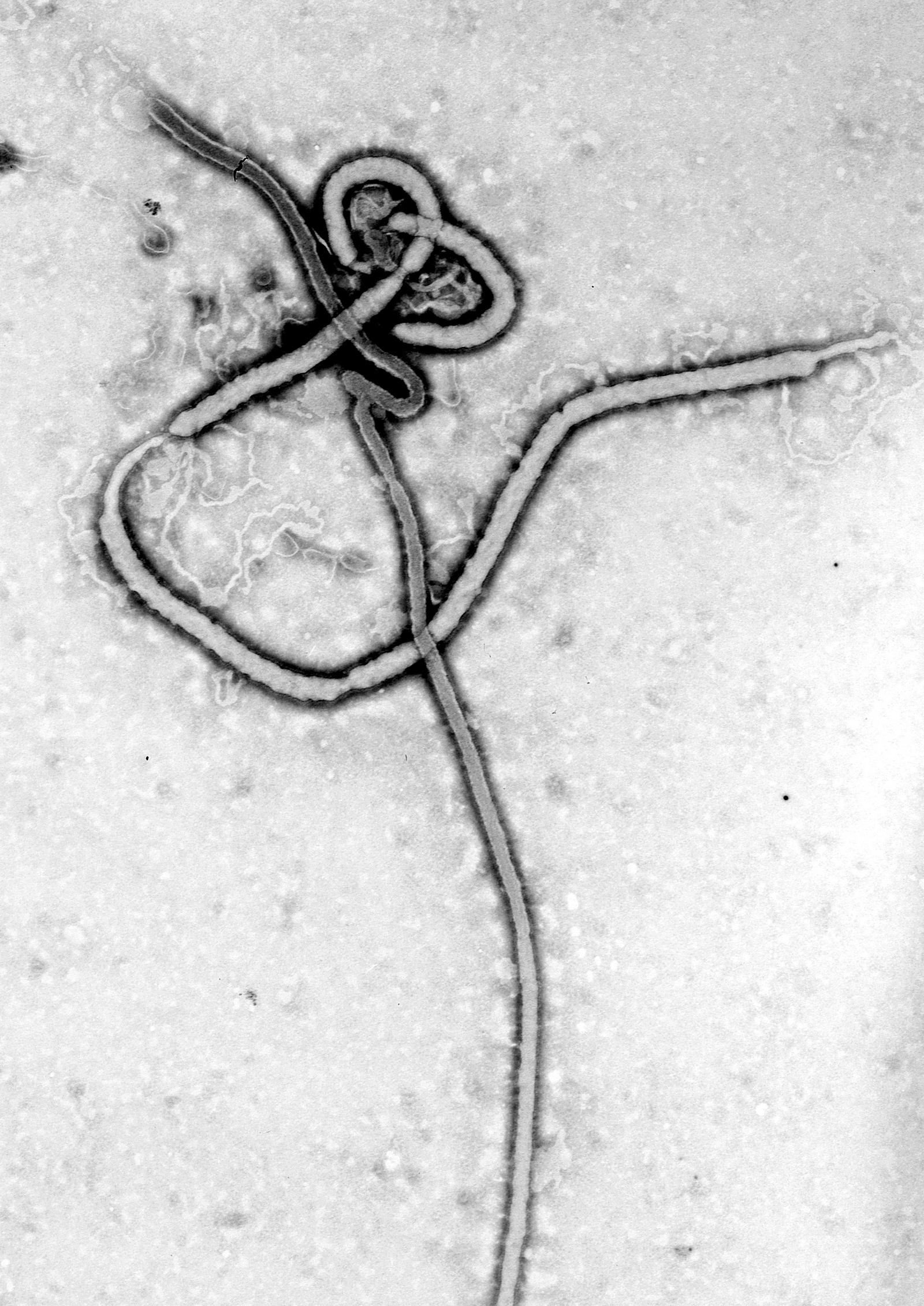
Sources: World Health Organization (primary — Disease Outbreak News DON630: declaration, Bundibugyo strain, PHEIC status, no approved vaccine or treatment; Rapid Risk Assessment v5, November 25, 2026: very-high risk, infections outside contact lists); Associated Press, November 26, 2026 (independent wire — 12,021 cases and 5,904 deaths per Congo's Health Ministry, Akwe evacuation, Iga-Barriere fighting); Reuters, November 26-27, 2026 (independent wire — same Ministry tally, US$1.576 billion plan, Tedros remarks). Photo is the CDC's 1976 electron micrograph of an Ebola viral particle.