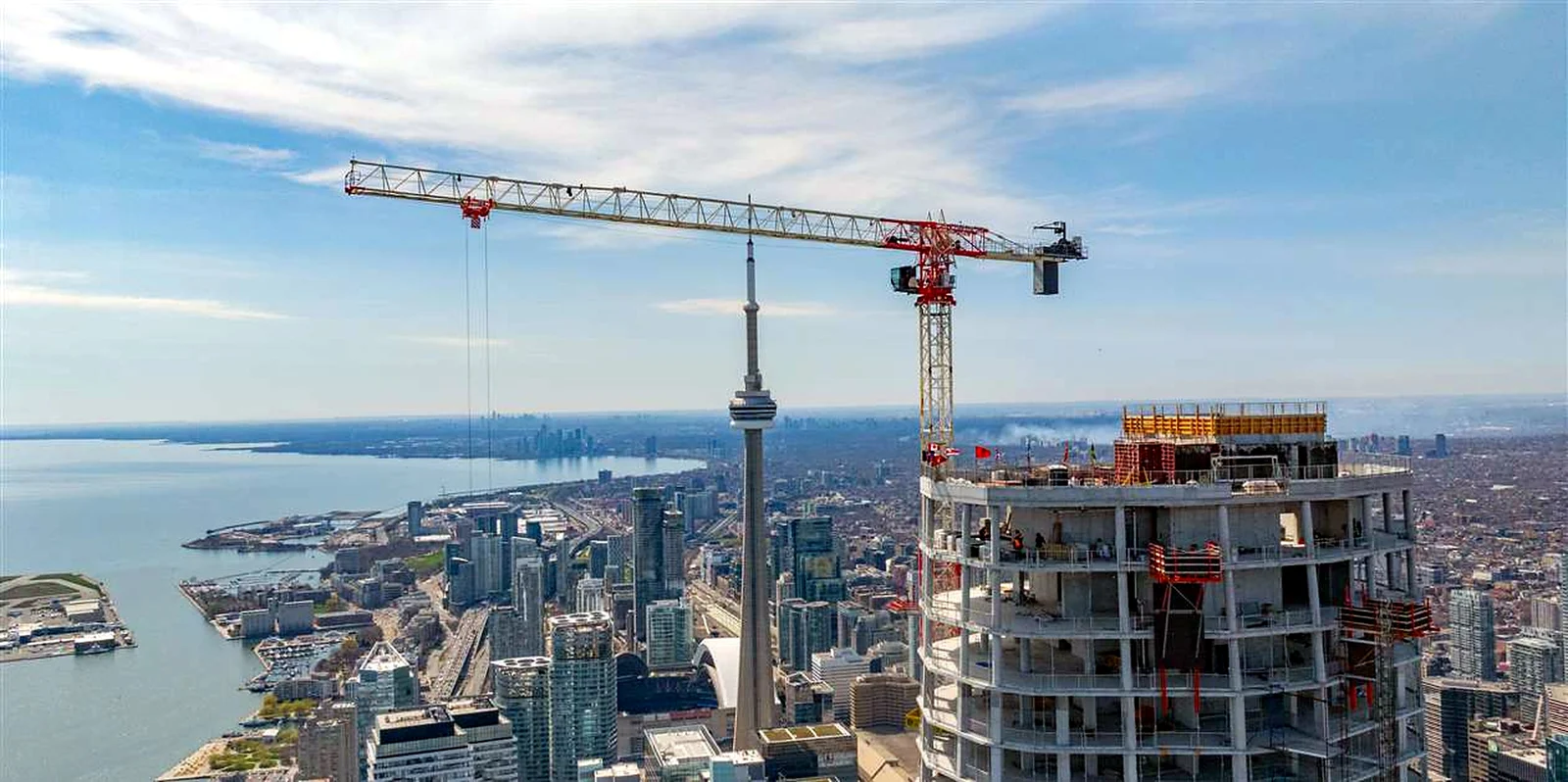
Toronto, Ontario — Canada's housing construction engine slowed in October, and Toronto led the slide. The Canada Mortgage and Housing Corporation (CMHC) released its October 2026 Starts and Completions Survey results on Tuesday, November 17, 2026, at 8:15 a.m. ET, reporting that the seasonally adjusted annual rate (SAAR) of housing starts for all areas of Canada fell 2% to 244,558 units, down from 250,072 in September.
The smoother measure moved the same way. The six-month trend in housing starts — a six-month moving average of the monthly SAAR, which CMHC uses to see through the sharp swings that multi-unit projects can cause in a single month — declined 1.7% in October to 246,231 units.
"October's results signal reduced momentum for housing construction, with the national trend decreasing, driven by declines in Ontario, British Columbia, and the Atlantic provinces," said Kevin Hughes, CMHC's Deputy Chief Economist. "The decline in pending starts suggests some softness in the near-term construction pipeline and should be monitored carefully. As noted in our latest Housing Supply Report, under-building during the current market downturn presents a risk for future affordability and could intensify supply pressures as demand recovers."
TORONTO PULLS THE NATIONAL NUMBER DOWN
Among Canada's three largest census metropolitan areas, Toronto was the drag. Its six-month trend fell 10% in October, as the trends for both single-detached and multi-unit starts decreased. The other two big markets moved the opposite way on the strength of multi-unit construction: Montreal posted a 6% month-to-month increase in its six-month trend, and Vancouver recorded a 2% increase.
The one figure pointing up is the count of homes actually started. Actual monthly housing starts in centres with a population of 10,000 or more rose 6% year over year to 21,059 units in October 2026, compared with 19,806 in October 2025. The year-to-date picture is weaker: 192,023 actual starts in those centres from January to October 2026, down 3% from the same period in 2025. Rural starts were estimated at a seasonally adjusted annual rate of 13,675 units.
THE PIPELINE AHEAD
The forward-looking numbers in the same release explain Hughes's caution. The number of units with approved building permits that have not yet started — pending starts — decreased 3% month-to-month to 139,592 units in October. The number of units under construction in centres of 50,000 or more was flat month-over-month at 369,569 units, while completions jumped, with construction finishing on 21,621 units, up 24% compared with September.
WHY IT MATTERS
Housing starts are the earliest hard count of tomorrow's supply, and Toronto is Canada's largest housing market. A 10% drop in Toronto's trend, arriving while the national trend also falls, means fewer homes entering the pipeline in the city that can least afford a thinner one — exactly the under-building risk CMHC flags for future affordability when demand recovers. Montreal and Vancouver show the slowdown is not uniform: multi-unit starts are still lifting their trends even as Toronto's fall on both the single-detached and multi-unit sides. CMHC releases housing starts data on the eleventh business day of each month; the November figures arrive December 15 at 8:15 a.m. ET.
Sources: Canada Mortgage and Housing Corporation, October 2026 Starts and Completions Survey release and Monthly Housing Starts and Other Construction Data Tables (November 17, 2026, 8:15 a.m. ET); The Canadian Press; Reuters.